
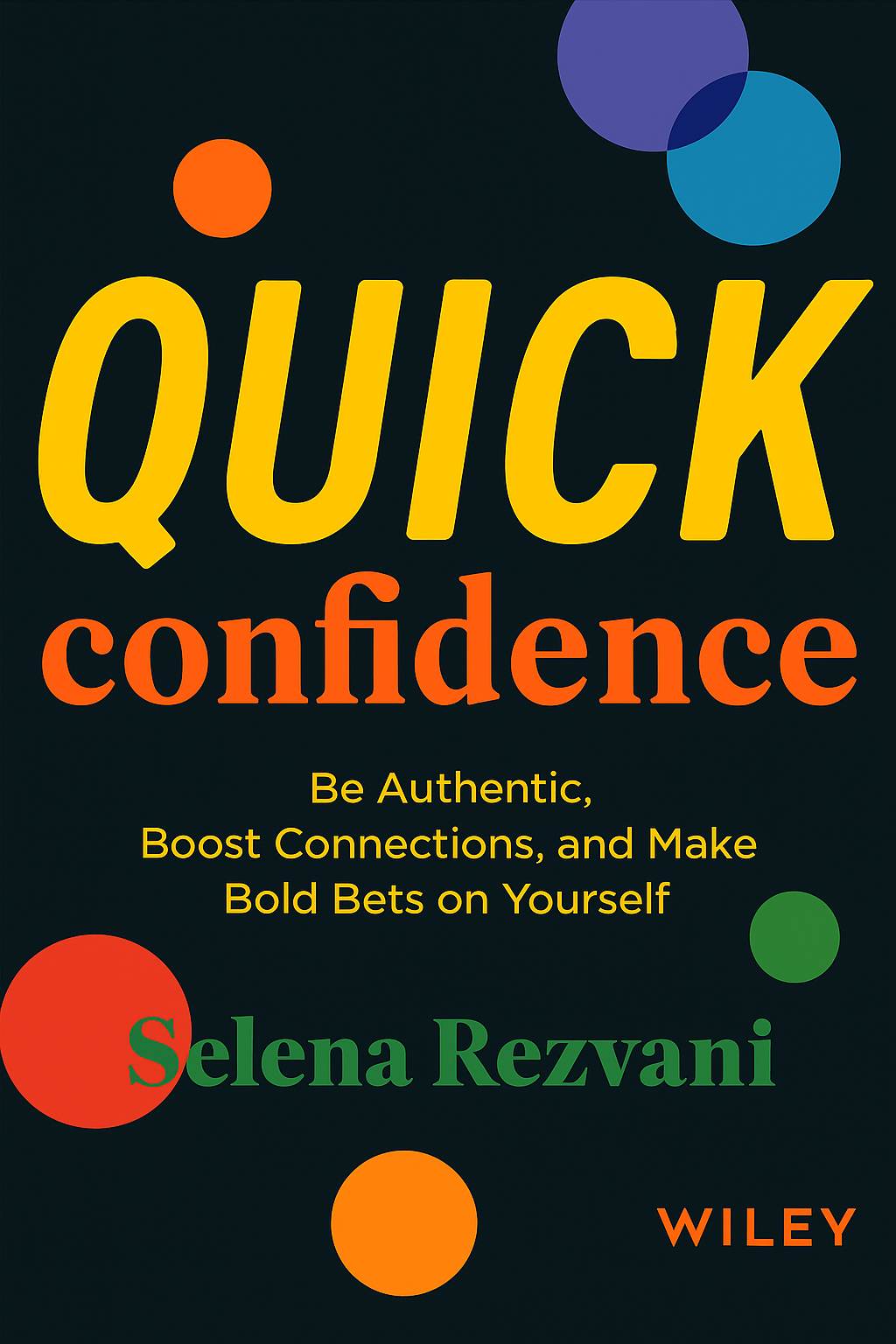
Quick Confidence
Be Authentic, Boost Connections, and Make Bold Bets on Yourself
Book Edition Details
Summary
Confidence isn't born; it's crafted, and "Quick Confidence" by Selena Rezvani is your sculptor's toolkit. This bestselling guide shatters the veneer of "fake it 'til you make it" with a refreshing blueprint that empowers professionals to cultivate genuine self-assurance. Rezvani, a luminary in leadership circles, deftly dismantles the nine barriers that inhibit authentic confidence, offering bite-sized, scientifically backed strategies to transform how you perceive and present yourself. Whether you're an executive, team leader, or a solo entrepreneur, this book serves as your personal coach, providing practical exercises to enhance your entrance, foster meaningful connections, and inspire confidence in others. More than a manual, it's a passport to a revitalized self-image and a catalyst for profound personal and professional growth.
Introduction
Have you ever stood at the edge of a big opportunity, heart pounding, knowing this moment could change everything? Maybe it was a job interview that could launch your career, a presentation to executives, or simply walking into a room where you felt like you didn't belong. In those pivotal moments, confidence isn't just nice to have—it's essential. Yet so many of us struggle with an internal critic that whispers we're not ready, not qualified, not enough. The truth is, confidence isn't something you're born with or without. It's a skill you can develop, practice, and master. When you learn to show up authentically, forge genuine connections, and take bold action despite your fears, you transform not just your career but your entire life. This journey begins with understanding that you already have everything you need within you—you just need the right tools to unlock it.
Create Powerful First Impressions and Belonging
Creating lasting first impressions isn't about perfection—it's about authentic presence. The moment you walk into a room, your energy, posture, and genuine interest in others communicate volumes before you even speak. This approach centers on bringing your whole, authentic self rather than trying to impress through performance. Consider the story of Madison Butler, an equity strategist who faced a shocking interview experience. When a company expressed enthusiasm about hiring her, they followed up with a devastating list of demands: change your hair color, cover your tattoos, remove your nose ring, straighten your hair, and wear a skirt. Instead of conforming to their narrow expectations, Madison made a bold choice that would transform her career. Rather than shrinking to fit their mold, Madison embraced what made her unique. She deliberately branded herself as "the blue-haired recruiter" on LinkedIn and at networking events. People began recognizing her immediately, saying "Oh my God, you're the blue-haired recruiter!" This authentic approach not only attracted the right opportunities but established her as a memorable professional who stood by her values. Today, she's known as The Blue Haired Unicorn, more successful than ever. The key to powerful first impressions lies in three fundamental actions: demonstrate warmth before competence, give genuine attention to others, and maintain confident body language. Start conversations by showing genuine interest in the other person rather than immediately showcasing your expertise. Square your body toward whoever is speaking, make steady eye contact, and listen with your full presence. When you do share about yourself, translate your impact into simple, non-technical language that anyone can understand. Remember that people form impressions within seconds, but those impressions can be deepened and transformed through consistent authentic interaction. Focus on being interested rather than just interesting, and you'll create connections that open doors to opportunities you never imagined.
Rebalance Power and Release Overthinking
Power imbalances show up everywhere in professional settings, often in subtle ways that can undermine your confidence and contribution. The key to navigating these situations lies in recognizing when power needs rebalancing and taking strategic action to reclaim your voice and position. A powerful example comes from addressing the common experience of being underestimated. Picture walking into a conference room where an executive points at his coffee mug and bellows "Excuse me!" assuming you're there to serve rather than lead. In that moment, you have a choice: accept the diminished role or confidently correct the misperception. The most effective response combines directness with professionalism—clearly stating your actual role while maintaining composure. The transformation happens when you learn to use techniques like reflective listening and boundary setting. If someone assumes you're in a junior position, you can calmly restate their assumption back to them: "So you're asking that I order the lunch?" This creates space to clarify that as the highest-ranking manager in the room, your time is better invested elsewhere. The key is addressing these moments immediately rather than letting them compound. Practical power rebalancing involves several concrete steps: eliminate excessive apologizing from your vocabulary, maintain a neutral facial expression when receiving disappointing news, and speak with decisive language rather than hedging words. Replace "I'm sorry to bother you" with "When you have a moment, I'd like X." Swap "I may be wrong, but" with "Here's what I know today." These small changes signal that you view yourself as an equal participant in professional conversations. The goal isn't to become aggressive or dismissive, but to inhabit your full professional presence with confidence. When you consistently demonstrate respect for your own time and expertise, others learn to treat you accordingly. Your power lies not in demanding recognition, but in consistently showing up as the professional you are.
Navigate High-Stakes Moments and Toxic Situations
High-stakes moments test our confidence like nothing else, but they also offer the greatest opportunities for growth and transformation. These pivotal experiences—whether delivering a critical presentation, negotiating a major deal, or confronting toxic behavior—require specific strategies to maintain composure and effectiveness. The story of preparing for and delivering a TEDx talk illustrates this perfectly. The months leading up to the event felt like a fever dream of preparation, with index cards on a metal ring becoming constant companions. The intimidation factor was enormous—standing on a red dot, delivering 18 minutes of content from memory to a sophisticated audience. But the preparation paid off, leading not only to a successful talk but to an unexpected journalism award and speaking opportunity to 1,000+ people. The transformation came through embracing the reality that high-stakes moments require accepting vulnerability as a prerequisite for courage. Instead of trying to eliminate nervousness, the focus shifted to using that energy productively. Visualization played a crucial role—mentally rehearsing not just the content but the sensory experience of success, including the sounds, sights, and feelings of delivering powerfully. For toxic situations, the approach involves different strategies but similar principles. When dealing with consistently negative colleagues or harmful workplace cultures, you must protect your energy while maintaining professional effectiveness. This might mean creating physical distance from chronic complainers, challenging negative perspectives with balanced viewpoints, or redirecting conversations toward actionable solutions rather than endless venting. The critical insight is that both high-stakes moments and toxic situations require you to anchor in your own values and capabilities rather than being swayed by external pressures. Whether you're preparing for a career-defining presentation or navigating a difficult colleague, your power comes from internal preparation, clear boundaries, and the willingness to act authentically despite discomfort. These challenging experiences become the foundation for unshakeable confidence.
Rise Above Setbacks and Scale Your Confidence
Setbacks aren't obstacles to confidence—they're the raw material from which true confidence is built. The difference between those who thrive after failure and those who remain stuck lies not in avoiding mistakes, but in how they process and learn from them. Scaling confidence means developing systems that turn every setback into a stepping stone. Consider the story of nearly quitting an MBA program after just one week. Surrounded by businesspeople who seemed naturally suited to corporate financial statements and industry analysis, the immediate reaction was "I don't fit here." The intimidation was so overwhelming that a "I quit" email was drafted and almost sent. But instead of following through, the decision was made to give it "just one more week." That single week became another, then another, until two years later, graduation day arrived with a 4.0 GPA and the honor of carrying the school's flag as Student Marshall. The transformation happened through what's called "failing forward"—treating each challenging moment as data rather than judgment. Instead of seeing struggles with quantitative analysis as proof of inadequacy, they became opportunities to develop new skills through persistence and support. The key was separating temporary performance from permanent identity, understanding that difficulty learning something new doesn't indicate inability to master it. Practical confidence scaling involves several key strategies: develop a short memory for small mistakes, create physical rituals for releasing disappointment, and maintain a growth mindset that views abilities as expandable rather than fixed. When you make an error, write it down in your mind with disappearing ink, watch it fade away, and then immediately engage in an activity where you can succeed to rebuild momentum. Energy management becomes crucial as you scale up your confidence. Instead of trying to manage time more efficiently, focus on managing your energy across four quadrants: physical, mental, emotional, and spiritual. This means fueling your body with movement and proper nutrition, protecting your mental focus through strategic breaks, cultivating positive emotions through appreciation, and aligning your activities with your deeper values and purpose. When you manage energy rather than time, you create sustainable confidence that grows stronger with each challenge you overcome.
Summary
Building genuine confidence is a practice, not a destination. It requires the courage to show up authentically in a world that often pressures us to conform, the wisdom to rebalance power when we're underestimated, and the resilience to transform setbacks into stepping stones. As this journey has shown, "If your presence doesn't make an impact, then your absence won't make a difference." Your confidence isn't dependent on external validation or perfect circumstances—it grows from within through consistent practice and authentic action. The techniques you've discovered here—from creating belonging through powerful first impressions to scaling your confidence through energy management—are tools you can use immediately. Start today by choosing one area where you've been playing small and take a single bold action. Trust yourself, show up fully, and remember that your unique combination of experiences, perspectives, and talents is exactly what the world needs. Your confidence journey begins with the next breath you take and the next step you choose to make.
Related Books
Download PDF & EPUB
To save this Black List summary for later, download the free PDF and EPUB. You can print it out, or read offline at your convenience.
By Selena Rezvani
