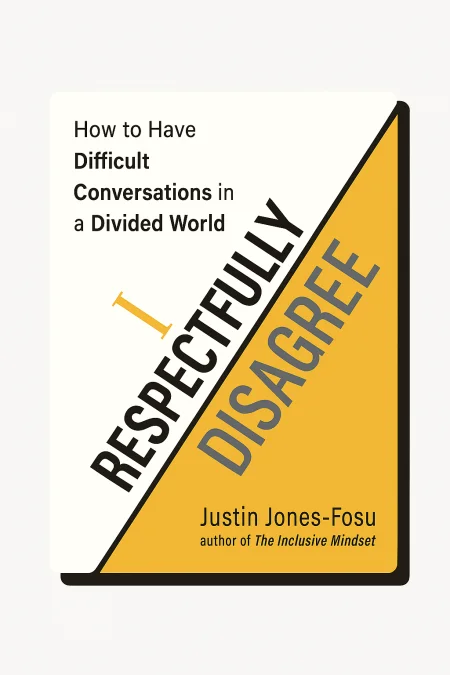
I Respectfully Disagree
How to Have Difficult Conversations in a Divided World
Book Edition Details
Summary
The art of conversation is not just about exchanging words; it's about bridging divides and nurturing understanding amidst discord. "I Respectfully Disagree" offers a refreshing take on the delicate dance of dialogue, guiding readers through five transformative pillars of respectful disagreement. In a world increasingly polarized, Justin Jones-Fosu injects humor and heart into serious discourse, illustrating with cartoons and anecdotes that even the toughest debates can be approached with playfulness and empathy. From workplace squabbles to kitchen table debates, this book arms you with tools to see beyond binary thinking, embrace curiosity, and engage with grace. As 2024 looms with potential discord, this timely manual is a beacon for those who yearn to connect deeply, beyond the noise of dissent.
Introduction
In our increasingly polarized world, conversations across differences often feel like navigating a minefield. Whether it's the dinner table discussion that turns tense, the workplace meeting where perspectives clash, or the community gathering where voices rise, we face a fundamental challenge: How do we honor our own convictions while treating others with dignity when we disagree? The answer lies not in avoiding conflict or surrendering our beliefs, but in learning the transformative art of respectful disagreement. This practice requires us to see beyond our immediate reactions, to listen with genuine curiosity, and to recognize the shared humanity that connects us even when our viewpoints diverge. When we master this skill, disagreement becomes not a barrier that divides us, but a bridge that leads to deeper understanding, stronger relationships, and meaningful progress on the issues that matter most.
Challenge Your Perspective and Humanize Others
The foundation of respectful disagreement begins with how we see those who hold different views from our own. Rather than viewing them as opponents to defeat or obstacles to overcome, we must learn to see them as fellow human beings deserving of dignity and respect. This fundamental shift in perspective transforms the entire landscape of how we engage with difference. Consider the powerful story of Patrick Hutchinson during a contentious protest in London. When he saw an injured counterprotester who held opposing political views, Hutchinson didn't see an enemy or an opportunity for revenge. Instead, he saw a human being in distress. Without hesitation, he lifted the man onto his shoulders and carried him to safety through an angry crowd. This remarkable act, captured in a photograph that spread worldwide, demonstrates the profound impact of choosing to humanize rather than dehumanize those with whom we disagree. Hutchinson's choice wasn't easy or automatic. It required him to override his natural impulses and choose a different response. He could have walked past, justified by the political divide between them. Instead, he chose to see past their ideological differences and respond to their shared humanity. This moment of grace didn't require him to change his political beliefs or agree with his opponent's views, but it did require him to recognize the person's inherent worth and dignity. To practice this perspective shift, start by examining your own assumptions about those who disagree with you. When you encounter opposing viewpoints, pause and ask yourself what experiences might have shaped this person's beliefs. Practice positive self-talk before difficult conversations, reminding yourself that the person you're engaging with is your equal, worthy of dignity and respect. Challenge yourself to find at least one point of common ground or shared concern, even in the midst of disagreement. The goal isn't to become naive or to abandon your convictions, but to approach disagreement from a place of curiosity rather than contempt. When we humanize others, we create space for genuine dialogue and open the door to understanding that can benefit everyone involved.
Cultivate Curiosity Over Conclusions
True understanding emerges when we approach disagreements with genuine curiosity rather than predetermined conclusions. This means resisting the urge to immediately categorize and judge others' perspectives, instead choosing to explore the experiences and reasoning that led them to their viewpoints. The author shares a deeply personal story about reconciling with his father after years of anger and resentment over his absence during childhood. For decades, he carried assumptions about his father's choices and motivations, filling in the gaps with conclusions that fueled his pain. The breakthrough came when he chose to approach his father with curiosity rather than accusation, asking about his life experiences and genuinely listening to understand rather than to judge. This shift from confrontation to curiosity created space for healing and connection that hadn't been possible before. Instead of demanding answers or delivering accusations, he asked open-ended questions about his father's experiences, challenges, and perspectives. Through this process, he discovered complexities and nuances in his father's story that his assumptions had never allowed him to see. While they may never fully agree on past decisions, this curious approach enabled them to build a meaningful relationship moving forward. Cultivating curiosity means learning to sit with uncertainty and resist the urge to fill in the blanks about others' motivations with our own assumptions. When faced with viewpoints that challenge or confuse you, try asking questions like "Help me understand how you came to that conclusion" or "What experiences shaped that perspective for you?" These inquiries demonstrate genuine interest in understanding rather than immediate judgment. Remember that curiosity doesn't require agreement. You can be genuinely interested in understanding someone's journey to their beliefs without adopting those beliefs yourself. The goal is to replace assumptions with actual knowledge and to see the full person behind their opinions. This approach often reveals common ground and shared values that were hidden beneath surface-level disagreements, creating opportunities for connection and mutual respect even amid ongoing differences.
Seek Gray Areas in Black-White Thinking
Most complex issues exist not in the realm of absolute right and wrong, but in nuanced gray areas that require careful consideration and collaborative exploration. Learning to seek and acknowledge these gray areas transforms disagreements from win-lose battles into opportunities for deeper understanding and creative solutions. The author describes his own journey of moving beyond black-and-white thinking about police officers. Initially, he held strong negative views shaped by legitimate concerns about police treatment of people of color. However, when a thoughtful woman challenged his broad generalizations, he chose to engage with curiosity rather than defensiveness. This led him to participate in police ride-alongs, speak with officers in his community, and read diverse perspectives on policing. Through this process, he began to see the complexity of policing that his previous black-and-white thinking had obscured. He discovered officers serving their communities with dedication while also acknowledging the serious problems within policing that needed addressing. This wasn't about changing sides or abandoning his concerns about police accountability, but about developing a more nuanced understanding that could inform more effective solutions. The transformation didn't happen overnight, and it required him to challenge his own comfort zone and preconceptions. But by seeking the gray areas, he found a more complete picture that honored both his concerns about justice and the humanity of individual officers. This broader perspective enabled more productive conversations and opened pathways for constructive engagement that his previous all-or-nothing thinking had blocked. To practice seeking gray areas, try approaching disagreements as collaborative problem-solving rather than competitive debates. Look for shared values and common ground, even when specific solutions differ. Ask questions like "What aspects of this issue do we both care about?" and "How might we address these concerns together?" Challenge yourself to find merit in opposing viewpoints without abandoning your core convictions. Remember that acknowledging complexity isn't weakness or wishy-washiness, it's intellectual honesty. Most real-world problems require nuanced solutions that draw from multiple perspectives. By seeking gray areas, you position yourself to contribute to meaningful progress rather than perpetuating unproductive polarization.
Practice Golden Respect in Every Interaction
Golden Respect goes beyond conventional notions of courtesy or politeness to embrace a fundamental recognition of every person's inherent worth and dignity. This practice transforms how we engage with others, especially during disagreements, by anchoring our interactions in respect regardless of whether that respect is reciprocated. The book shares the remarkable story of individuals who showed respect to a former extremist despite his hateful words and actions toward them. Rather than responding with anger or dismissal, these people chose to listen to his story, acknowledge his humanity, and treat him with dignity even while firmly rejecting his harmful ideology. Their consistent demonstration of respect eventually became a catalyst for his transformation, showing him a reflection of himself that his hate-filled worldview had obscured. This wasn't about agreeing with or validating his harmful beliefs, but about recognizing his capacity for change and treating him as a human being worthy of dignity. Their respect didn't enable his harmful behavior but rather created conditions where he could see beyond his own hatred and begin to question the foundations of his extremist worldview. The transformation was gradual and required his own hard work, but their initial choice to offer respect rather than contempt planted seeds that eventually bore fruit. These individuals demonstrated that respect is a choice we make about ourselves and our values, not a reward we give to others based on their behavior. They showed Golden Respect by separating the person from their actions, acknowledging human worth while still opposing harmful ideologies and behaviors. To practice Golden Respect, start by recognizing that every person has inherent dignity regardless of their beliefs or actions. This doesn't mean accepting harmful behavior or compromising your values, but rather approaching each interaction from a foundation of basic human respect. Use the "Thank you, because" framework to acknowledge others' perspectives even when you disagree, showing appreciation for their willingness to share while identifying any common ground you can find. Focus on behavior and ideas rather than personal attacks, and remember that respect is a gift you give that reflects your character, not a transaction based on others' worthiness. By practicing Golden Respect consistently, you create conditions for meaningful dialogue and demonstrate a way of engaging that can inspire others to respond in kind.
Summary
The path to bridging divides through respectful disagreement isn't about abandoning our convictions or pretending that all viewpoints are equally valid. Instead, it's about recognizing that our shared humanity transcends our ideological differences and that meaningful progress often emerges from honest dialogue across divides. As the author powerfully reminds us, "We can vehemently disagree with someone's ideology and still passionately pursue their humanity." This principle transforms disagreement from a destructive force that tears relationships apart into a constructive tool that can strengthen understanding and create pathways to solutions. The journey requires courage to examine our assumptions, curiosity to understand different perspectives, wisdom to seek complexity in seemingly simple issues, and the moral strength to treat all people with dignity regardless of their beliefs. Start today by identifying one person or group with whom you disagree and commit to engaging them with genuine curiosity and respect, seeking to understand their perspective while maintaining your own integrity and values.
Related Books
Download PDF & EPUB
To save this Black List summary for later, download the free PDF and EPUB. You can print it out, or read offline at your convenience.
By Justin Jones-Fosu
