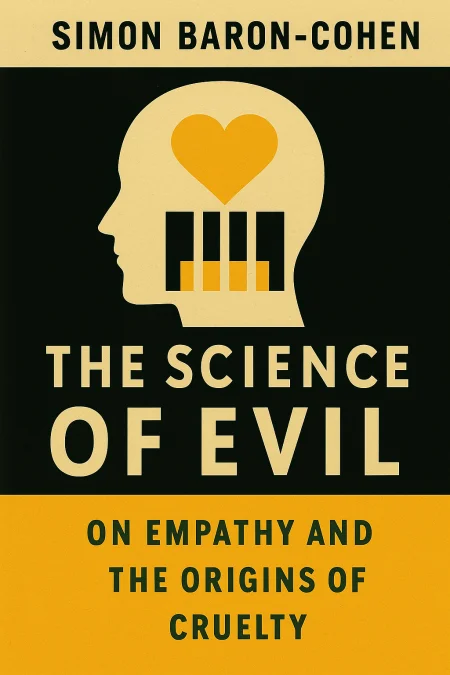
Science of Evil
On Empathy and the Origins of Cruelty
Book Edition Details
Summary
In a world where empathy is the thread that weaves humanity together, Simon Baron-Cohen dares to pull at its seams in "The Science of Evil." Here lies an exploration not of traditional malevolence, but of the chilling void where compassion should reside. Baron-Cohen, a luminary in the fields of psychology and autism research, shifts the narrative from condemning "evil" to understanding the neurological and environmental roots of cruelty. Through a tapestry of research and insight, he paints a provocative picture of how empathy's erosion—often shaped by neglect and abuse—can transform human beings into vessels of harm. This compelling analysis challenges us to rethink the nature of cruelty and invites a profound reexamination of our understanding of human behavior.
Introduction
Human cruelty presents one of the most disturbing puzzles of our existence. From historical atrocities to everyday acts of callousness, the capacity for one person to inflict harm on another challenges our understanding of human nature itself. Rather than accepting traditional explanations that invoke concepts of inherent evil or moral failure, a revolutionary approach emerges that grounds this phenomenon in neuroscience and psychology. The central proposition challenges conventional wisdom by arguing that what we commonly label as "evil" behavior stems from a measurable, biological capacity: empathy. When empathy erodes or fails to develop properly, individuals become capable of treating others as mere objects rather than feeling beings. This reframing transforms a moral and philosophical question into a scientific one, opening pathways for understanding, prediction, and potentially even intervention. Through rigorous examination of brain imaging studies, genetic research, and detailed case analyses, this investigation reveals that empathy exists on a spectrum, with profound implications for how we comprehend both cruelty and compassion. The analysis distinguishes between different pathways that lead to empathy deficits, demonstrating that not all forms of reduced empathy result in harmful behavior. Some individuals with empathy challenges may actually contribute valuable perspectives to society through their unique cognitive abilities. This scientific approach to understanding cruelty offers hope that we might better identify, prevent, and address the conditions that enable humans to harm one another, ultimately leading to more effective interventions and a deeper comprehension of human moral behavior.
The Empathy Spectrum and Zero Degrees of Empathy
Empathy functions as a dimmer switch rather than a simple on-off mechanism, creating a measurable spectrum of human emotional responsiveness. At its core, empathy requires dual-focus attention: the ability to simultaneously consider one's own mental state while accurately perceiving and responding to another person's thoughts and feelings. This capacity varies dramatically across individuals, forming a bell curve distribution in the general population. The concept of "zero degrees of empathy" emerges as a critical threshold where individuals lose the ability to recognize others as feeling beings with their own subjective experiences. At this extreme, people become objects to be manipulated, ignored, or harmed without emotional consequence for the perpetrator. This state represents a profound cognitive and emotional blind spot where the humanity of others simply disappears from conscious awareness. Scientific measurement of empathy through psychological instruments reveals consistent patterns across populations. The Empathy Quotient provides a standardized method for assessing individual differences, consistently producing the expected bell curve distribution. Higher scores correlate with greater social sensitivity, stronger moral reasoning, and more prosocial behavior, while lower scores predict difficulties in relationships and increased risk of harmful actions toward others. Understanding empathy as a spectrum rather than a binary trait revolutionizes how we conceptualize moral behavior. Rather than dividing humanity into "good" and "evil" categories, this framework recognizes gradations of empathic capacity that can fluctuate based on circumstances, development, and neurological factors. This scientific grounding provides a foundation for more nuanced and effective approaches to understanding and addressing human cruelty.
Zero-Negative Types: Borderline, Psychopathic, and Narcissistic
Three distinct pathways lead to zero degrees of empathy, each characterized by specific patterns of thought, emotion, and behavior that render individuals incapable of recognizing the humanity of others. These "zero-negative" types share the common feature of empathy deficits while manifesting through different psychological mechanisms and developmental trajectories. Borderline personality disorder represents one pathway, characterized by intense fear of abandonment coupled with unstable relationships and explosive emotional reactions. Individuals with this condition experience such overwhelming internal distress that they become incapable of considering others' feelings or needs. Their empathy circuits fail under the weight of their own emotional chaos, leading to manipulative, self-destructive, and often harmful behaviors toward those closest to them. The constant internal crisis leaves no psychological resources for recognizing or responding to others' emotional states. Psychopathic personality disorder follows a different route, marked by callousness, lack of remorse, and calculated manipulation of others. Unlike the emotional turbulence seen in borderline conditions, psychopathy involves a cold absence of emotional response to others' distress. These individuals may possess intellectual understanding of others' feelings but lack the emotional resonance necessary for genuine empathy. This enables them to exploit, harm, or destroy others without experiencing the guilt or distress that would normally inhibit such behavior. Narcissistic personality disorder creates the third pathway through grandiose self-focus and sense of entitlement. Individuals with narcissism become so absorbed in their own perceived importance and needs that others exist merely as extensions of themselves or obstacles to their desires. Their empathy fails because their attention never genuinely shifts away from their own concerns long enough to recognize others as separate beings with legitimate feelings and rights. Each type demonstrates how different developmental and neurological factors can converge on the same endpoint: the inability to empathize with others' experiences.
Zero-Positive: Autism Spectrum and Systemizing Excellence
A remarkable discovery challenges the assumption that all forms of empathy deficit lead to harmful outcomes. Individuals on the autism spectrum often experience zero degrees of empathy while simultaneously developing extraordinary abilities in pattern recognition, systematic thinking, and attention to detail. This "zero-positive" condition demonstrates that empathy deficits can coexist with valuable cognitive strengths and strong moral principles. The autistic brain compensates for empathy difficulties through enhanced systemizing abilities—the capacity to analyze, understand, and predict patterns in the environment. While these individuals struggle to read social cues and emotional expressions, they excel at understanding rule-based systems, from mathematics and music to mechanical processes and natural phenomena. This cognitive profile creates individuals who may appear socially awkward or insensitive but who contribute enormously to scientific, artistic, and technological advancement. Crucially, empathy deficits in autism rarely translate into cruelty or exploitation of others. Instead of developing alternative routes to moral behavior, individuals on the autism spectrum often display rigid adherence to ethical principles based on logic and fairness rather than emotional understanding. They may struggle to comfort someone in distress due to empathy deficits, but they strongly oppose unfairness, dishonesty, or rule-breaking because these violations offend their systematic understanding of how the world should operate. This zero-positive condition reveals that empathy represents only one pathway to moral behavior. Logical, rule-based moral reasoning can produce equally strong ethical commitments, sometimes even more consistent than emotion-based moral judgments. The existence of zero-positive individuals demonstrates that reduced empathy need not inevitably lead to antisocial behavior and suggests that different cognitive profiles may contribute unique and valuable perspectives to human society.
Genetic and Environmental Origins of Empathy Variations
The development of empathy emerges from complex interactions between genetic predispositions and environmental influences, with neither factor alone determining an individual's empathic capacity. Twin studies consistently demonstrate significant heritability for empathy-related traits, with genetic factors accounting for approximately 50-70% of individual differences. This genetic component manifests through multiple biological pathways affecting brain development, neurotransmitter function, and hormonal influences on neural circuits. Specific genes associated with empathy variations include those affecting serotonin transport, oxytocin production, and sex hormone regulation. The MAOA gene, sometimes called the "warrior gene," influences aggression levels and emotional regulation. Variations in cannabinoid receptors affect reward processing and social motivation. Sex hormone-related genes shape brain development during crucial prenatal periods, influencing the balance between empathizing and systemizing cognitive styles. These genetic influences operate through their effects on specific brain regions within the empathy circuit. Environmental factors prove equally crucial, particularly early childhood experiences that shape attachment patterns and emotional development. Secure attachment relationships provide what might be termed an "internal pot of gold"—a foundation of emotional security and trust that enables healthy empathy development. Conversely, abuse, neglect, or inconsistent caregiving can severely damage developing empathy circuits, leading to various forms of zero-negative conditions. Trauma appears to have particularly devastating effects during sensitive periods of brain development. The interaction between genes and environment proves more complex than simple addition. Certain genetic predispositions only manifest under specific environmental conditions, while particular environments may trigger empathy deficits only in genetically vulnerable individuals. Understanding these gene-environment interactions offers hope for identifying at-risk individuals early and developing targeted interventions to support healthy empathy development before irreversible damage occurs.
Summary
The scientific investigation of human cruelty reveals that what we traditionally label as "evil" behavior stems from measurable deficits in empathy—the capacity to recognize and respond appropriately to others' feelings and mental states. This reframing transforms moral and philosophical questions about human nature into empirical scientific inquiries with practical implications for understanding, preventing, and addressing harmful behavior. The discovery that empathy exists on a spectrum, with some individuals experiencing zero degrees of empathy through multiple pathways, provides unprecedented insight into the biological and psychological foundations of both cruelty and compassion. Perhaps most significantly, the recognition that reduced empathy can sometimes coexist with valuable cognitive abilities and strong moral reasoning challenges simplistic notions of good and evil, suggesting that human diversity in empathic capacity may serve important functions in society while requiring careful understanding and support to prevent harmful outcomes.
Related Books
Download PDF & EPUB
To save this Black List summary for later, download the free PDF and EPUB. You can print it out, or read offline at your convenience.
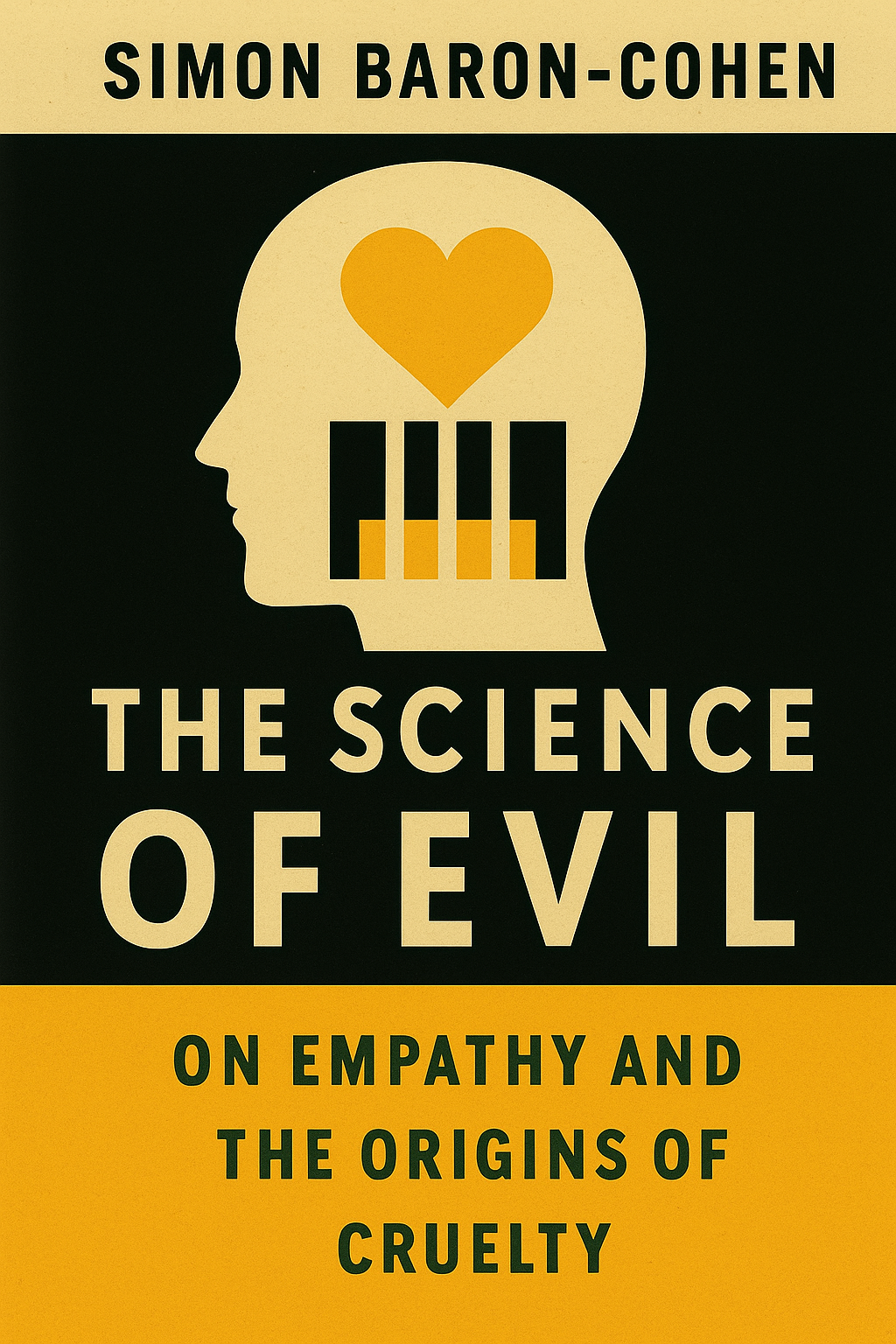
By Simon Baron-Cohen
