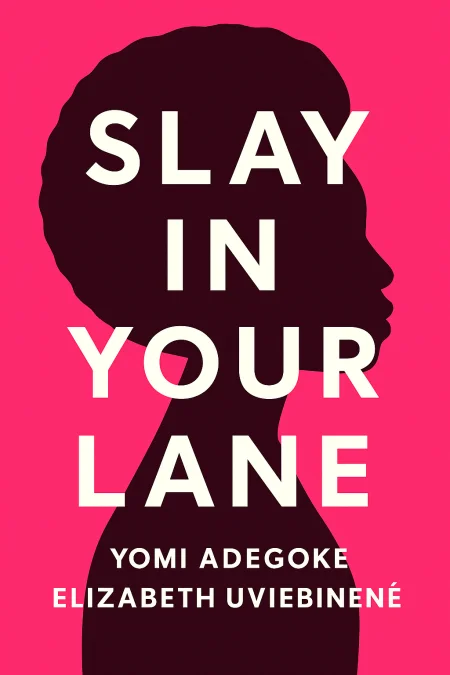
Slay in Your Lane
The Black Girl Bible
byYomi Adegoke, Elizabeth Uviebinené
Book Edition Details
Summary
In a world that often overlooks their brilliance, black British women are not just surviving—they're orchestrating a revolution. "Slay in Your Lane" is a clarion call, a dynamic manifesto crafted by Yomi Adegoke and Elizabeth Uviebinené, who weave their personal narratives with the triumphs of Britain's trailblazing black women. From classrooms to boardrooms, from intimate relationships to the public eye, this book tackles the unique challenges faced by black women with unflinching honesty and a spirited resolve. It's not merely a book but a vibrant guide brimming with practical wisdom and invigorating inspiration, designed to empower women to rise above societal constraints and redefine success on their own terms. Through compelling interviews and heartfelt stories, this essential read celebrates the strides already made while lighting the path for a future brimming with possibility and visibility.
Introduction
The meeting room falls silent as Sarah presents her innovative marketing strategy, her voice steady despite being the only Black face around the polished conference table. Her ideas are met with polite nods, but when her white colleague repeats the same concepts twenty minutes later, the room erupts with enthusiasm. This moment of invisible erasure, experienced by countless Black women across Britain, captures the complex reality of navigating professional spaces that weren't designed with them in mind. These stories emerge from the lived experiences of thirty-nine remarkable women who refused to accept limitations imposed by others. From corporate boardrooms to creative studios, from university lecture halls to entrepreneurial ventures, they share their journeys not as tales of victimhood, but as blueprints for transformation. Their voices reveal how systemic barriers, while real and persistent, can become launching pads for innovation and change. Through candid conversations about education, career advancement, financial independence, and personal growth, this collection illuminates both the challenges and opportunities that define the Black British female experience. These women demonstrate that success isn't about fitting into existing structures, but about leveraging unique perspectives to create new possibilities. Their stories offer practical wisdom for navigating bias, building wealth, maintaining authenticity, and ultimately thriving in spaces where your presence itself becomes an act of revolution.
From Classroom Bias to Academic Excellence
Dawn Butler's twelve-year-old hands trembled as she compared her history assignment with Andrea's, her white classmate who consistently earned top marks. Dawn had poured her heart into the research, crafting what she knew was exceptional work. Her assignment demonstrated deeper analysis and more thorough investigation than Andrea's, yet when papers were returned, Dawn stared at the red "D" scrawled across her work while Andrea celebrated another "A." The accusation came swift and certain: Dawn had cheated. There was no investigation, no benefit of doubt, just an immediate assumption that a young Black girl couldn't possibly produce work of that caliber. Dawn found herself in an impossible position, unable to prove her innocence, watching as her efforts were dismissed not on merit, but on prejudice. The teacher's reaction revealed a troubling pattern where excellence from Black students was met with suspicion rather than recognition. Dr. Maggie Aderin-Pocock faced similar underestimation throughout her educational journey. Labeled as "not very bright" due to her dyslexia, she was relegated to remedial classes where teachers wielded safety scissors and low expectations in equal measure. When she expressed fascination with science and space exploration, well-meaning educators gently redirected her toward "more suitable" careers like nursing. It wasn't until a single moment in a science class, when she correctly answered a complex question that stumped her peers, that she began to see her own potential differently. These experiences illuminate how educational institutions often fail to recognize and nurture Black girls' potential, creating barriers that have nothing to do with ability and everything to do with bias. Yet these same challenges forge resilience, determination, and an unwavering belief in the transformative power of education, ultimately producing leaders who refuse to accept others' limitations as their own reality.
Navigating Corporate Spaces and Building Wealth
Karen Blackett's team had delivered a flawless presentation for a major breakfast cereal brand. The strategy was sound, the creative brilliant, the execution perfect. She felt confident as they awaited client feedback, knowing they had given their best effort. When the response came, it wasn't about the work at all. "MediaCom were actually quite good," the client said, "but there's no way we would ever have had a female business director, let alone a Black one." The words hit like a physical blow. This rejection had nothing to do with competence, creativity, or capability. It was about the color of her skin and her gender, two immutable characteristics that some clients couldn't see past. For a moment, Karen questioned herself, wondering if she had somehow cost her agency the business simply by being who she was. The familiar sting of discrimination threatened to undermine her confidence and professional identity. But then perspective shifted everything. Karen realized that working with people who couldn't see past her race and gender would have been a daily battle, a constant struggle to prove her worth to those who had already decided she had none. The rejection, painful as it was, had actually saved her from a toxic relationship that would have diminished her light. She channeled that disappointment into determination, using it as fuel to win even bigger accounts and prove that their loss was truly their own. Charlene White's tears streamed down her face as she stood in Richmond, her solicitor's voice confirming the sale of her first property. Her father, puzzled by her emotional response, tried to console her. "It's just bricks and mortar," he said gently. But for Charlene, at twenty-four, this house represented something revolutionary: complete financial independence achieved without family wealth, connections, or inherited advantages. Every brick symbolized late nights at work, every room represented sacrifices made, every payment a step toward autonomy. This wasn't just property; it was proof of capability, determination, and refusal to wait for someone else to provide security. These experiences reveal how financial independence becomes both personal achievement and political statement, creating generational change that ripples forward through time.
Redefining Beauty Standards and Media Representation
Ten-year-old Yomi clutched her pocket money tightly as she wandered the magazine aisle, drawn to glossy covers promising transformation through tutorials and tips. Week after week, she purchased beauty magazines hoping to find techniques that worked for her hair texture and skin tone. But the reality was consistently disappointing: butterfly clips snapped under the weight of her thick curls, hair wax sat uselessly on top of her plaits, and styling techniques that looked effortless on blonde models became exercises in frustration. The clear nail polish and toe separators became small victories, neutral territories where her Blackness didn't disqualify her from participation. Yet the message was unmistakable: beauty, as defined by mainstream media, was a club she couldn't join, no matter how desperately she wanted to belong. These early experiences of exclusion from beauty standards reflected a broader pattern of invisibility that Black women faced across media representation. When Ade Hassan couldn't find makeup that matched her deep brown skin, she didn't simply accept the industry's message that she wasn't their customer. Instead, she began writing letters to beauty brands, demanding representation. Her persistence, multiplied by thousands of other voices, eventually contributed to seismic shifts in an industry that had long ignored women of color. Years later, when major brands finally expanded their shade ranges, the darkest tones consistently sold out, proving that demand had always existed. Sandra Brown-Pinnock discovered that every Afro hair shop in her South London area was owned by men who weren't Black, creating the absurd situation of seeking hair advice from people who had never experienced her hair texture. She opened XSandy's, becoming the only Black woman-owned hair shop in the entire region, where customers found not just products, but expertise born from lived experience. These stories demonstrate how exclusion from beauty standards sparked innovation, as Black women became entrepreneurs, critics, and change agents, forcing entire industries to expand their definitions of beauty and belonging.
Love, Identity and the Power of Authentic Living
The club lights pulsed as the young man approached with practiced confidence, delivering what he clearly thought was the ultimate compliment: "You know, you're the prettiest Black girl in this club." The words hung in the air like a backhanded gift, wrapped in qualification and delivered with expectation of gratitude. But why the asterisk? Why the category? In a room full of women, why couldn't she simply be the prettiest, without the racial qualifier that seemed to diminish rather than elevate? The comment revealed more about his limitations than her beauty, more about his inability to see her as simply attractive rather than attractive "for a Black girl." It was recognition that came with conditions attached, admiration wrapped in prejudice. This moment crystallized a harsh reality about dating as a Black woman: that even positive attention can carry the weight of stereotypes and assumptions, that even compliments can feel like consolation prizes. Dating apps revealed uncomfortable statistical truths about attraction and prejudice in the digital age. Data showed that Black women received fewer messages and responses than any other demographic, reflecting deeper societal hierarchies that positioned them at the bottom of desirability scales despite their individual beauty, intelligence, and accomplishments. The pressure to find partnership intensified for Black women who faced both cultural expectations about marriage and statistical realities about limited prospects. Yet within these challenges emerged stories of self-discovery and redefined priorities. Women began asking not just whether someone found them attractive, but whether potential partners understood the unique pressures they faced as Black women in predominantly white societies. The search for love became intertwined with the search for understanding, as romantic compatibility expanded to include cultural awareness and social consciousness. These experiences ultimately revealed that authentic partnership required not just personal chemistry, but partners willing to engage with the full complexity of identity and social position that Black women navigate daily.
Summary
The journeys chronicled throughout these pages reveal a fundamental truth about resilience and transformation: when systems exclude, marginalized communities don't simply disappear, they innovate, create alternatives, and eventually force change from the outside in. Black women's responses to exclusion have consistently generated solutions that benefit not just themselves, but entire industries and societies. From beauty brands expanding shade ranges to workplaces implementing more inclusive practices, the ripple effects of their advocacy and entrepreneurship have reshaped landscapes far beyond their original scope. These stories demonstrate that individual struggles, when shared and contextualized, become collective strength. The young woman searching for foundation that matches her skin tone was never alone; she was part of a continuum of women who refused to remain invisible, who demanded better, and who created change through persistence, creativity, and unwavering belief in their own worth. Their refusal to accept "no" as a final answer opened doors for future generations to walk through with greater ease. Perhaps most importantly, these narratives illuminate how authenticity and success are not mutually exclusive. The greatest triumphs came not from diminishing their identities to fit existing spaces, but from leveraging unique perspectives as competitive advantages. In a world increasingly hungry for diverse voices and innovative solutions, these women prove that barriers, while real and challenging, are not permanent. Their legacy reminds us that the courage to challenge exclusion ultimately benefits everyone seeking a more inclusive and equitable world, and that individual acts of resistance can spark systemic transformation.
Related Books
Download PDF & EPUB
To save this Black List summary for later, download the free PDF and EPUB. You can print it out, or read offline at your convenience.
By Yomi Adegoke
