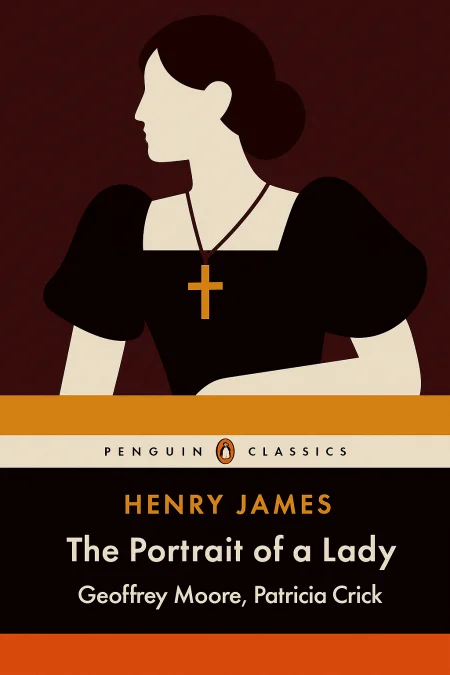
The Portrait of a Lady
A Tale of Independence, Love, and Societal Expectations
byHenry James, Geoffrey Moore, Patricia Crick
Book Edition Details
Summary
In the vivid tapestry of 19th-century Europe, Isabel Archer emerges as a beacon of defiance and autonomy. This spirited American, caught in the whirl of high society's expectations, dares to chart her own course. Her journey, laced with the allure of freedom and the peril of choices, leads her to the enigmatic Gilbert Osmond—a man whose polished exterior conceals a sinister core. As Isabel navigates the treacherous waters of love and betrayal, Henry James crafts a tale of poignant introspection and societal critique. "The Portrait of a Lady" is not just a novel; it's a timeless exploration of the human spirit's clash with societal norms, inviting readers to ponder the price of self-determination.
Introduction
What does it truly mean to be free when the very pursuit of independence can become the mechanism of its destruction? This fundamental paradox drives one of literature's most penetrating examinations of how personal autonomy intersects with social manipulation, particularly in the realm of marriage and gender relations. The narrative employs psychological realism to reveal how well-intentioned choices can transform into instruments of control, while seemingly benevolent relationships mask deeper schemes of possession and dominance. The exploration unfolds through meticulous character analysis rather than dramatic external events, demonstrating how individual consciousness responds to systematic pressure and manipulation. The work's enduring relevance lies in its recognition that the most sophisticated forms of control operate not through obvious coercion but through the exploitation of our highest aspirations and most cherished values. Modern readers will find striking parallels in contemporary struggles with authentic self-determination versus subtle social pressures that shape choices in ways we often fail to recognize. The analysis proceeds through four critical phases of psychological development, tracing how personal tragedy emerges not from single catastrophic decisions but from the gradual accumulation of compromises that ultimately reshape identity itself.
Isabel's Independence: The Illusion of Autonomous Choice
Isabel Archer embodies the American ideal of self-determination, arriving in Europe with an unwavering belief in her right to shape her own destiny through conscious choice rather than inherited status or social expectation. Her rejection of conventional marriage proposals reflects a profound philosophical commitment to authentic existence, viewing personal worth as something that must be actively created rather than passively accepted. This stance positions her as a figure of modern individualism, someone who believes that genuine freedom requires the preservation of choice itself, even when such preservation means rejecting seemingly advantageous opportunities. The irony embedded in Isabel's situation becomes apparent through her inheritance, which she views as liberation but which actually makes her a target for sophisticated manipulation. Her wealth provides the material foundation for independence while simultaneously attracting individuals who understand how to exploit idealistic impulses for their own purposes. The financial resources that should enable authentic choice instead create new forms of vulnerability, as her economic power becomes inseparable from her appeal to potential manipulators who recognize the connection between her money and her desire to use it meaningfully. Isabel's commitment to making her own choices becomes meaningless when the context for those choices has been carefully orchestrated by others who possess superior knowledge of social dynamics and human psychology. Her marriage to Gilbert Osmond appears to represent the ultimate expression of personal agency, choosing aesthetic refinement and intellectual compatibility over material security or social advantage. Yet this apparent triumph of individual will actually demonstrates how thoroughly her autonomy has been compromised by those who understand how to present manipulation as respect for independence. The tragedy lies not in Isabel's desire for freedom, but in her failure to recognize how that very desire can be weaponized by those who understand its psychological mechanisms. Her quest for authentic selfhood becomes the instrument of her entrapment, revealing the complex relationship between freedom and knowledge, choice and manipulation, in human relationships where power operates through seemingly benevolent guidance rather than obvious coercion.
Marriage as Control: How Idealism Enables Manipulation
The transformation of Isabel's marriage from romantic ideal to psychological prison illustrates how intimate relationships can become vehicles for the systematic erosion of personal autonomy when one partner possesses superior understanding of social dynamics and fewer moral scruples. Gilbert Osmond's initial appeal lies precisely in his apparent respect for Isabel's independence and intellectual capabilities, yet this very appreciation masks a deeper intention to possess and reshape her according to his aesthetic and social vision. The marriage reveals itself as a carefully constructed trap where Isabel's strengths become the foundation for her subjugation. Osmond's method of control operates through the gradual redefinition of Isabel's identity within the marriage structure, employing subtle psychological pressure that transforms her natural generosity and desire to please into instruments of compliance. Rather than crude domination, he creates an atmosphere of refined disappointment, making Isabel feel perpetually inadequate despite her efforts to conform to his expectations. Her wish to be a good wife becomes indistinguishable from self-erasure, as Osmond's vision of domestic harmony requires her to abandon the very qualities that initially attracted him. The domestic sphere becomes a theater of psychological warfare where every interaction carries the weight of larger power struggles over autonomy and identity. Osmond's cultivation of aesthetic standards and social expectations creates a prison more effective than physical constraint, as Isabel finds herself constantly monitoring and modifying her behavior to avoid her husband's subtle but devastating disapproval. The marriage transforms from a partnership into a performance where authenticity becomes impossible and spontaneity is viewed as a threat to carefully maintained appearances. The presence of Pansy in the household adds another dimension to Isabel's entrapment, as maternal feelings become another avenue for manipulation and control. Her genuine affection for her stepdaughter creates additional obligations that bind her to an increasingly intolerable situation, demonstrating how emotional bonds can become chains when exploited by those who understand their psychological power and are willing to use family relationships as instruments of coercion.
Social Deception: The Systematic Orchestration of Personal Destiny
The revelation of Madame Merle's role in orchestrating Isabel's marriage exposes the extent to which seemingly personal choices can be products of elaborate social manipulation conducted by those who possess superior knowledge of human psychology and fewer moral constraints. Madame Merle represents the sophisticated European understanding of how individual consciousness can be managed and directed through careful cultivation of circumstances, relationships, and information. Her friendship with Isabel serves strategic rather than genuine purposes, demonstrating how social connections can become instruments of exploitation when one party possesses hidden motives and superior social intelligence. The conspiracy between Madame Merle and Osmond reveals marriage as a social institution that can be weaponized by those who understand its economic and psychological dimensions while remaining invisible to their victims. Isabel's wealth makes her valuable not just as a wife but as a solution to Osmond's financial problems and social ambitions, while her American idealism makes her susceptible to manipulation by those who can present themselves as embodying European cultural sophistication. The marriage becomes a business transaction disguised as romantic choice, with Isabel serving as both the purchaser and the commodity being sold. The systematic nature of the deception demonstrates how individual agency can be undermined through the careful management of information and social context, creating the illusion of free choice while actually constraining options through invisible manipulation. Isabel's decisions appear autonomous because she remains unaware of the forces shaping her alternatives, yet this apparent freedom masks a profound unfreedom. Her choice of Osmond over other suitors seems to express personal preference and superior judgment, but it actually reflects the successful implementation of a plan designed to exploit her psychological vulnerabilities and social inexperience. The broader social implications of this manipulation extend beyond individual tragedy to reveal how power operates through seemingly benevolent relationships and cultural institutions. Madame Merle's ability to orchestrate events while maintaining the appearance of friendship illustrates the sophisticated mechanisms through which social hierarchies perpetuate themselves, using the idealism and good faith of their victims as instruments of their own subjugation and demonstrating how trust itself can become a weapon in the hands of those who understand its value.
The Return to Rome: Redefining Freedom Through Moral Commitment
Isabel's ultimate decision to return to Rome after Ralph's death represents neither simple capitulation nor heroic sacrifice, but rather a complex negotiation between competing claims of duty, conscience, and personal integrity that redefines freedom itself. Her choice emerges from a recognition that authentic autonomy cannot be achieved through escape alone but must be grounded in some form of moral commitment that transcends immediate personal satisfaction. The return to Osmond represents not the abandonment of independence but its redefinition within the constraints of existing obligations and moral responsibilities. The influence of Ralph's death on Isabel's decision reveals how genuine love, as opposed to possessive attachment, can provide moral clarity even in seemingly impossible situations. Ralph's example of selfless devotion offers a model of how personal relationships can enhance rather than diminish individual dignity, contrasting sharply with the manipulative dynamics that have characterized her marriage. His final conversations with Isabel provide her with the knowledge necessary to understand her situation fully, yet this understanding paradoxically makes simple escape more difficult rather than easier by revealing the moral complexity of her circumstances. Isabel's rejection of Caspar Goodwood's offer of liberation demonstrates her recognition that authentic freedom requires more than the mere absence of constraint or the satisfaction of immediate desires. His passionate appeal represents the temptation of pure escape from social obligation and moral complexity, yet Isabel's refusal suggests her understanding that such escape would constitute another form of self-betrayal. Her commitment to return to Rome reflects not masochistic self-sacrifice but a mature recognition that personal integrity sometimes requires accepting the consequences of past choices, even when those choices were made under false pretenses. The final image of Isabel's determination suggests not resignation but resolution, a commitment to confront her situation with full knowledge rather than flee from it in ignorance or denial. Her return represents the transformation of victimhood into agency, as she chooses to engage with her circumstances rather than be defined by them, finding in conscious acceptance a form of freedom that transcends mere physical liberation and grounds itself in moral commitment and self-knowledge.
Summary
The deepest insight emerging from this psychological exploration reveals that authentic freedom emerges not from the absence of constraint but from the conscious engagement with moral complexity, even when such engagement requires accepting painful consequences of choices made in ignorance or under manipulation. The narrative demonstrates how the very qualities that make someone admirable can become instruments of their subjugation when exploited by those who understand human psychology's vulnerabilities, yet it also suggests that genuine agency can be reclaimed through the difficult process of achieving full self-knowledge and moral commitment. This analysis offers profound insights for contemporary readers navigating the subtle territories where personal autonomy intersects with social obligation, making it essential for anyone seeking to understand how individual dignity can be preserved within the inevitable compromises of human relationship and social existence.
Related Books
Download PDF & EPUB
To save this Black List summary for later, download the free PDF and EPUB. You can print it out, or read offline at your convenience.

By Henry James
