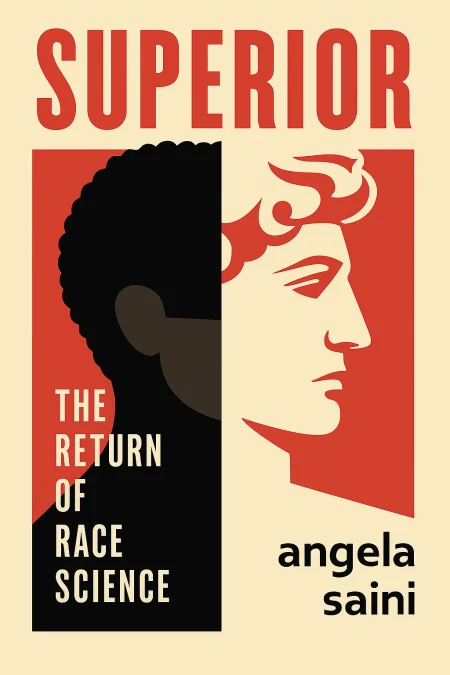
Superior
The Return of Race Science
Book Edition Details
Summary
In the shadowed corridors of science, a dangerous myth persists—that race carves deep lines in the human genome. "Superior" by Angela Saini dismantles this illusion with razor-sharp precision. Journey through the unsettling landscape where post-war eugenicists quietly rekindled the embers of discredited doctrines, breathing life into the faulty narratives that fueled infamous works like "The Bell Curve." Saini unravels the intricate tapestry of modern-day race science, revealing its insidious entanglements in today's intellectual fabric. By shedding light on these uncomfortable truths, she challenges readers to confront the unsettling reality that the specter of racial pseudoscience is not just history—it is a living, breathing threat that demands our vigilant scrutiny. In a world where appearances often deceive, Saini's narrative is a clarion call for unity, underscoring our shared genetic heritage amid a backdrop of imagined divisions.
Introduction
The concept of biological race continues to exert powerful influence over scientific discourse, political policy, and social understanding despite overwhelming evidence against its validity. This persistent myth represents one of the most successful examples of how scientific authority can be appropriated to legitimize social hierarchies that serve specific political and economic interests. The enduring appeal of racial categories reveals fundamental tensions between empirical evidence and deeply embedded cultural beliefs about human difference. Modern genetic research has systematically dismantled the biological foundations of traditional racial classifications while simultaneously being misappropriated to support new forms of racial thinking. The commercialization of ancestry testing, the revival of race-based medicine, and the emergence of sophisticated statistical techniques have created fresh opportunities for racial myths to persist under the guise of scientific objectivity. These developments demonstrate how legitimate scientific methods can be corrupted when filtered through existing cultural frameworks and ideological commitments. The analysis employs both historical examination and contemporary genetic findings to reveal how racial categories emerged from specific political contexts rather than natural biological divisions. By tracing the evolution of racial science from its colonial origins through its modern manifestations, this investigation exposes the consistent patterns through which scientific institutions have perpetuated harmful myths while obscuring the remarkable unity underlying human diversity. The evidence spans from colonial human exhibitions to modern DNA studies, revealing how scientific racism adapts to changing circumstances while maintaining its core function of justifying inequality.
How Historical Politics Created the Illusion of Biological Race
The modern conception of race emerged not from careful scientific observation but from the specific needs of European colonial expansion and economic exploitation. During the height of the colonial period, European scientists systematically classified human beings into hierarchical categories that conveniently positioned themselves at the apex of human development while relegating other populations to inferior positions. This classification system served crucial political and economic functions, providing intellectual justification for slavery, colonialism, and territorial conquest. The transformation of human difference from fluid geographical variation into fixed racial categories represented a fundamental shift in how societies understood human diversity. Before the eighteenth century, physical differences were often viewed as temporary adaptations to climate and environment. The hardening of these differences into permanent, heritable racial essences coincided precisely with the expansion of European power and the need to justify the subjugation of other peoples. Scientific institutions played a central role in legitimizing these racial hierarchies through seemingly objective measurement and classification. Museums, universities, and research societies provided the intellectual infrastructure for racial science, creating an aura of scholarly respectability around what were fundamentally political projects. The establishment of human zoos, anthropometric laboratories, and racial classification systems transformed prejudice into apparent scientific fact. The consequences of this scientific racism extended far beyond academic circles, shaping legal systems, immigration policies, and social structures that persist today. The intellectual framework developed during this period provided the foundation for later eugenic movements and genocidal ideologies, demonstrating how scientific authority can be marshaled in service of devastating political ends.
Why Modern Genetics Completely Undermines Racial Categories
Genetic research has systematically demolished the biological foundations of traditional racial classifications while revealing the true patterns of human diversity. The Human Genome Project and subsequent population studies demonstrate that genetic variation within any supposed racial group far exceeds variation between groups. African populations contain more genetic diversity than all other human populations combined, making it scientifically absurd to treat Africans as a single biological category. Ancient DNA research has revealed the complex history of human migration and intermixing that renders modern racial boundaries meaningless. European populations result from multiple waves of migration from Africa, the Middle East, and Central Asia, with significant genetic contributions from Neanderthals and other archaic human species. The indigenous populations of any region typically represent the latest arrivals in a continuous process of human movement and genetic exchange spanning tens of thousands of years. Studies of specific traits supposedly linked to race reveal the inadequacy of racial explanations for human biological variation. Skin color, the most visible marker of racial difference, evolved independently in multiple populations as an adaptation to varying levels of ultraviolet radiation. Populations with similar skin tones often share no recent common ancestry, while closely related groups may exhibit dramatically different pigmentation levels. The search for race-specific genetic variants has yielded remarkably little despite massive research investments. Medical conditions supposedly characteristic of particular racial groups typically occur across multiple populations and correlate more strongly with geographic ancestry than with socially defined race. Even sickle cell anemia, often cited as a racial disease, occurs in Mediterranean, Middle Eastern, and South Asian populations where malaria historically posed significant threats.
How Scientific Networks Perpetuate Discredited Racial Theories
Despite widespread rejection of scientific racism after World War II, networks of researchers continued to promote racial theories through alternative channels and publications. These networks operated largely outside mainstream academic institutions, creating parallel systems of publication, funding, and intellectual validation that kept racial science alive during periods when it was otherwise discredited. The Pioneer Fund and publications like Mankind Quarterly served as crucial nodes in these networks, providing financial support and publishing opportunities for researchers whose work was rejected by mainstream journals. The resilience of these networks stemmed partly from their international character and their ability to adapt to changing political circumstances. When overt racism became socially unacceptable, these researchers developed more sophisticated rhetorical strategies, emphasizing statistical differences between populations while downplaying the political implications of their work. They successfully rebranded racial science as objective inquiry into human biodiversity. Academic conferences and online forums provide additional venues for racial scientists to coordinate their research agendas and recruit new adherents. The London Conference on Intelligence brought together researchers investigating racial differences alongside speakers with explicit neo-Nazi affiliations. Online platforms allow racial theorists to share unpublished research and coordinate media strategies for promoting their findings. The influence of these networks extended beyond academic circles into policy-making institutions, particularly during periods of political conservatism. The ability of marginal researchers to gain access to government positions and influence policy decisions reveals the ongoing political utility of racial science, even when its scientific credibility has been thoroughly undermined.
Why Social Facts Trump Scientific Evidence in Racial Thinking
The persistence of racial thinking despite overwhelming scientific evidence against its validity reveals the limitations of purely factual approaches to combating deeply rooted social beliefs. Racial categories serve important psychological and political functions that extend far beyond their supposed biological basis, making them resistant to purely scientific refutation. The social construction of racial identity means that racial categories can persist even when their biological foundations are thoroughly discredited. People continue to experience race as a meaningful aspect of their identity through discrimination, cultural practices, and social institutions, creating a reality that exists independently of biological validity. This social reality provides the foundation for continued belief in biological race. The political utility of racial categories ensures their persistence among those who benefit from existing hierarchies or seek to mobilize group identity for political purposes. Racial myths provide simple explanations for complex social phenomena, offering appealing alternatives to more nuanced analyses of historical and structural factors that shape social outcomes. The integration of racial thinking into fundamental aspects of social organization means that abandoning racial categories would require massive institutional and cultural transformation. Educational systems, legal frameworks, and social policies are all organized around racial categories, creating powerful institutional momentum for their continuation. Medical applications of racial categories demonstrate the practical failures of biological race concepts while revealing how social inequalities become misinterpreted as genetic differences. Health disparities between racial groups consistently correlate more strongly with socioeconomic factors than with genetic ancestry, yet researchers continue to search for race-specific genetic variants despite repeated failures to identify meaningful biological differences.
Summary
The enduring power of racial myths lies not in their scientific validity but in their capacity to serve political, economic, and psychological needs that transcend empirical evidence. Race represents one of the most successful examples of how scientific authority can be appropriated to legitimize social hierarchies, creating belief systems that persist long after their factual foundations have been demolished. The remarkable consistency with which racial science has served the interests of dominant groups across different historical periods reveals the fundamentally political nature of this supposedly objective enterprise. Understanding this history provides essential tools for recognizing how contemporary debates about human difference continue to be shaped by these deeply embedded patterns of thought and power, while the failure of decades of research to identify meaningful biological differences between racial groups demonstrates the fundamental inadequacy of racial explanations for human diversity.
Related Books
Download PDF & EPUB
To save this Black List summary for later, download the free PDF and EPUB. You can print it out, or read offline at your convenience.
By Angela Saini
