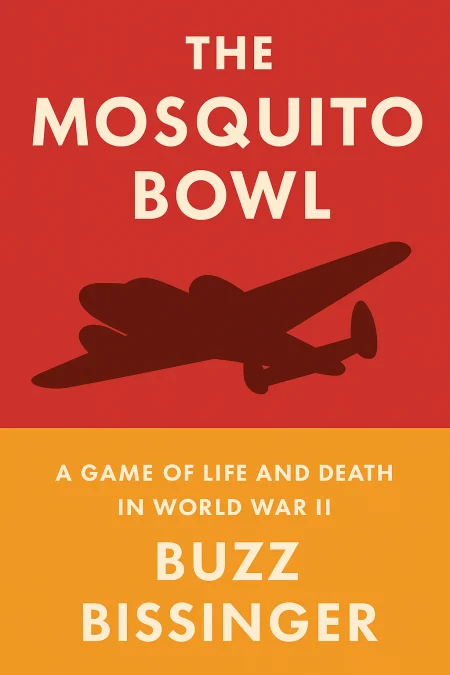
The Mosquito Bowl
A Game of Life and Death in World War II
Book Edition Details
Summary
On Christmas Eve, 1944, amidst the Pacific swells and looming specter of Okinawa, a rivalry brews not on traditional battlegrounds but on a makeshift football field. The Marines of the 4th and 29th regiments, fueled by the spirit of competition and camaraderie, clash in a fierce game known as "The Mosquito Bowl." This gritty spectacle unfolds against a backdrop of impending chaos, as 64 college football stars-turned-soldiers face not only each other but an uncertain future. From the fervent banter of the gridiron to the grim realities of war, Pulitzer Prize-winning Buzz Bissinger delves into this poignant wartime narrative. He paints a vivid tapestry of youthful exuberance and tragic loss, capturing the essence of a generation tested by conflict yet bound by the unyielding ties of sport and sacrifice.
Introduction
On Christmas Day 1944, beneath the scorching Pacific sun of Guadalcanal, sixty-five young Marines gathered for what would become one of the most tragic sporting events in American military history. These weren't ordinary servicemen seeking entertainment—they were former college football stars, All-Americans, and future NFL prospects who had traded their cleats for combat boots. The Mosquito Bowl represented far more than a simple game between Marine regiments; it embodied the collision between America's most cherished pastime and its most devastating conflict. This extraordinary story illuminates three profound questions that resonate far beyond the gridiron and battlefield. How did a generation raised on Friday night lights and Saturday afternoon glory transform into the warriors who would face Japan's most fanatical defenders? What was the true human cost of victory in the Pacific, measured not in strategic objectives captured but in dreams forever deferred and lives cut tragically short? And how did the values forged in small-town America—teamwork, sacrifice, and leadership under pressure—sustain men through humanity's darkest trials? The narrative that unfolds speaks to anyone seeking to understand the human dimension of global conflict, the price of preserving democratic ideals, and the enduring power of brotherhood forged in the crucible of war. It's a story that transforms cold military statistics into deeply personal journeys, revealing how ordinary young men answered their generation's call to extraordinary purpose and paid the ultimate price for the freedoms we often take for granted.
From Campus Heroes to Marine Warriors (1940-1943)
The transformation began in the autumn months of 1942, when America's entry into global war demanded unprecedented sacrifice from its finest young men. College campuses across the nation watched their most celebrated athletes abandon promising careers for an uncertain fate in the Pacific theater. Dave Schreiner, Wisconsin's towering All-American end, left behind his fiancée and dreams of medical school. Tony Butkovich, Purdue's unstoppable fullback, walked away from certain professional stardom. These weren't reluctant draftees but volunteers who understood that their generation's defining moment had arrived with Pearl Harbor's smoke. The Marine Corps, recognizing both opportunity and desperate need, actively recruited these college stars through programs like V-12, believing their combination of physical courage, tactical thinking, and leadership under pressure made them ideal officer material. Yet the transition from campus celebrity to anonymous recruit proved brutally jarring. At Parris Island and Quantico, former team captains found themselves reduced to trembling privates, their athletic achievements meaningless against the relentless demands of drill instructors determined to break down civilian identities and rebuild them as Marines. What emerged from this crucible wasn't merely military efficiency but a profound shift in American identity itself. These young men embodied the nation's evolution from isolationist observer to global warrior, their willingness to sacrifice personal glory for collective survival reflecting a generation's understanding that some causes transcend individual ambition. The football field had taught them teamwork, resilience, and grace under pressure; now they would apply these lessons where the stakes were measured not in touchdowns but in lives, not in championships but in the survival of democratic civilization. This period established the unshakeable foundation for everything that followed—the bonds of brotherhood that would sustain them through unimaginable horror, the sense of sacred purpose that would drive them forward when retreat seemed the only rational choice, and the quiet understanding that leadership meant going first into danger, not finding ways to avoid it.
Island Crucible: Forging Combat Veterans (1943-1944)
By 1944, the former college stars had evolved into seasoned Marines, their boyish faces hardened by months of intensive training and their first brutal taste of amphibious combat. The Pacific Theater had become a vast chessboard where each captured island brought American forces closer to Japan's doorstep, and with it, increasingly desperate resistance. From Guadalcanal's steaming jungles to Tarawa's blood-soaked beaches, these men learned the savage arithmetic of island warfare—that every yard of enemy territory came at a price measured in American blood. The island-hopping campaign revealed both the promise and peril of revolutionary military strategy. Each assault refined the deadly techniques of beach landings, naval bombardment, and close-quarters jungle fighting, yet the Japanese defenders grew increasingly ingenious and fanatical. At Tarawa in November 1943, Marines discovered that even massive preliminary bombardments couldn't guarantee victory against an enemy willing to fight to the last man from interconnected bunkers and tunnels. The lesson proved sobering: technological superiority meant nothing without the moral courage to close with and destroy a determined foe. For the future Mosquito Bowl players scattered across various Marine units, this period forged the final elements of their warrior identity through trial by fire. John McLaughry led dangerous reconnaissance patrols through impenetrable jungle, learning that survival often depended more on instinct and brotherhood than textbook tactics. Dave Schreiner and Bob Bauman, inseparable since their Wisconsin days, discovered that friendship could be both salvation and vulnerability in combat—the fear of losing a brother sometimes outweighing concern for one's own survival. The gathering storm of late 1944 pointed inexorably toward Okinawa, where Japan would make its final, most desperate stand before the home islands. The Marines who had once competed for touchdowns and campus glory now prepared for a battle that would test everything they had learned about warfare, sacrifice, and the true meaning of victory purchased with the lives of America's finest young men.
The Last Game: Mosquito Bowl and Okinawa's Reckoning (1944-1945)
The Mosquito Bowl emerged from the peculiar combination of military boredom and athletic nostalgia that characterized life on secured Guadalcanal in late 1944. With the island transformed into a massive staging area for future operations, Marines had time to remember who they had been before war transformed them into killers. What began as typical military braggadocio between the 29th and 4th Regiments evolved into something far more profound—a final celebration of American youth before its ultimate test on Okinawa's killing fields. The game itself was magnificent chaos, played on a field carved from coral and dirt, with cut-off dungarees serving as football pants and Marine field shoes substituting for cleats. The 1,500 spectators represented men from across America—farm boys from Iowa, factory workers from Detroit, college graduates from the Ivy League—united by their shared commitment to defeating fascism. Radio broadcasts carried the contest across the Pacific, a defiant reminder that American values and joy persisted even in the midst of total war against an enemy that celebrated death. What made the contest truly extraordinary wasn't the quality of play, but the quality of the players themselves. The combined rosters included sixteen men who had been or would be drafted by professional teams, five former team captains, and three All-Americans. This wasn't merely a pickup game but arguably the most talented collection of football players ever assembled on a single field, representing the cream of American college athletics now serving as Marine officers preparing for their final mission. Within months, the Battle of Okinawa would transform this moment of pure joy into tragedy of almost incomprehensible proportions. The assault on Japan's doorstep became the bloodiest Pacific battle, claiming over 12,000 American lives in eighty-two days of savage fighting. Of the sixty-five Marines who played in the Mosquito Bowl, more than a dozen would die on Okinawa's hills and roughly twenty others would be wounded—a casualty rate that exceeded even the most pessimistic pre-battle estimates and illuminated the true cost of American victory.
Blood and Memory: The Price of Victory (1945-Present)
The survivors of Okinawa returned to an America that had moved beyond them, their wartime experiences seeming almost mythical to a nation eager to embrace peacetime prosperity and forget war's terrible cost. John McLaughry, who had once blocked for college champions, found solace in coaching, trying to instill in young athletes the values of teamwork and sacrifice he had learned in combat. Frank Bauman carried the memory of his fallen teammates like a sacred burden, never fully able to articulate the depth of his loss to those who hadn't shared the experience of watching friends die for abstract ideals made concrete. The post-war years revealed the true cost of victory—not just in lives lost but in dreams deferred and spirits forever altered by what they had witnessed and done. Many veterans struggled with what would later be recognized as post-traumatic stress, their nights haunted by the faces of fallen comrades and the sounds of distant artillery that never quite faded. The transition from life-and-death decisions to suburban routine proved jarring for men who had commanded others in battle and witnessed humanity at both its worst and its most heroic. Yet their legacy transcended personal tragedy and psychological wounds. The Mosquito Bowl players had helped preserve the democratic ideals that made their sacrifice meaningful, proving that when civilization itself hangs in the balance, ordinary people can rise to extraordinary heights of courage and selflessness. Their willingness to abandon promising careers for uncertain fate in distant battles ensured that future generations would inherit a world where freedom remained possible, where young men could play football on autumn afternoons without fear of totalitarian oppression. The weight of memory grew heavier with each passing year, as fewer voices remained to tell their story and America gradually forgot the price paid for its prosperity. But in that weight lay profound meaning—the understanding that some gifts are too precious to be forgotten, some sacrifices too sacred to be reduced to mere statistics, and some lessons too important to be lost in the comfortable amnesia of peace.
Summary
The story of the Mosquito Bowl illuminates the central paradox of democratic warfare—that free societies must sometimes demand the ultimate sacrifice from their finest citizens to preserve the very freedoms that make such sacrifice voluntary rather than compelled. These young Marines embodied the collision between American optimism and global reality, their journey from campus heroes to fallen warriors revealing both the terrible cost and absolute necessity of confronting totalitarian evil with moral courage rather than mere military might. Their legacy offers three enduring lessons for our own turbulent times, when democracy again faces challenges from authoritarian forces and internal division. First, that true leadership emerges not from privilege or position but from willingness to place others' welfare above personal ambition—a quality these athletes demonstrated both on the field and in combat, where they led from the front rather than commanding from safety. Second, that freedom's preservation requires each generation to understand what previous generations sacrificed to secure it, lest we take for granted liberties purchased with the blood of our finest young men and women. Finally, in an age of increasing cynicism and division, we must remember that shared purpose and mutual sacrifice remain the foundation of any society worth defending. The fifteen men who died at Okinawa challenge us to consider what causes we would willingly die for, and more importantly, what principles we choose to live by each day. Their story reminds us that heroism isn't the absence of fear but the decision to act despite it, that the greatest victories often come at the highest price, and that in remembering their sacrifice, we honor not just their memory but the ideals they died defending.
Related Books
Download PDF & EPUB
To save this Black List summary for later, download the free PDF and EPUB. You can print it out, or read offline at your convenience.
By Buzz Bissinger
