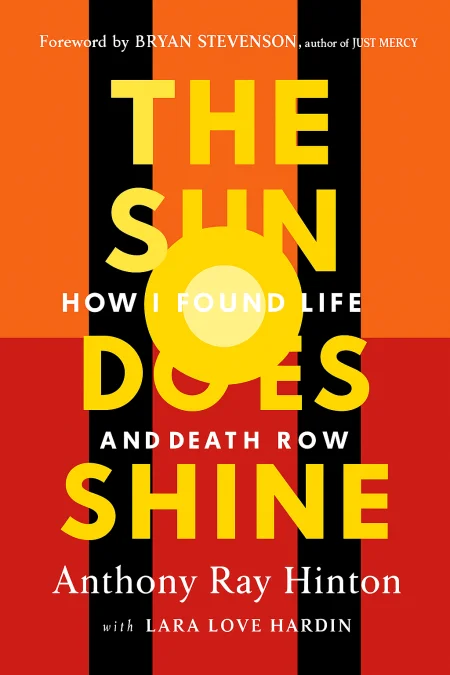
The Sun Does Shine
How I Found Life and Freedom on Death Row
byBryan Stevenson, Anthony Ray Hinton, Lara Love Hardin
Book Edition Details
Summary
In the suffocating confines of a death row cell, Anthony Ray Hinton's spirit blazed with a light that defied the darkness of injustice. Arrested in 1985 for murders he did not commit, Hinton's world twisted into a nightmare shaped by systemic prejudice and poverty in the Deep South. Stripped of freedom but not of his soul, he endured three years in tormented silence before kindling hope in himself and others, sparking friendships in the shadow of execution. With resilience and the aid of renowned civil rights attorney Bryan Stevenson, his story emerges not just as a narrative of survival, but as a testament to the indomitable human spirit. "The Sun Does Shine" invites readers to witness a harrowing journey where humor, imagination, and unyielding joy triumph over despair, offering a poignant reminder that true justice is found within the human heart.
Introduction
On a sweltering Alabama afternoon in 1985, Anthony Ray Hinton was cutting grass in his mother's backyard when two police officers arrived to arrest him for murders he didn't commit. What followed was a thirty-year odyssey through America's criminal justice system that would test the very limits of human endurance and reveal the extraordinary power of hope to survive in the darkest places imaginable. Hinton's story unfolds against the backdrop of the Deep South, where the legacy of Jim Crow still cast long shadows over courtrooms and the scales of justice weighed differently for black and white defendants. Raised by a mother who taught him to love unconditionally and see the humanity in everyone, Hinton carried these lessons with him into a nightmare that would have broken most men. His journey reveals the profound inequalities that plague our justice system, where poverty and race can determine not just the quality of legal representation, but life or death itself. Yet this is not merely a story of injustice endured, but of dignity maintained and compassion cultivated in the most unlikely circumstances. Through Hinton's extraordinary experience, readers will discover how one man transformed a place designed to strip away humanity into a community of unlikely friendship and mutual support. His story illuminates the redemptive power of education and imagination, the importance of maintaining hope against impossible odds, and the profound truth that our worst circumstances cannot define who we choose to become. Most remarkably, it demonstrates how forgiveness can become not an act of weakness, but the ultimate expression of strength and freedom.
Wrongful Conviction and Death Row Reality
Anthony Ray Hinton's path to death row began not with any crime he committed, but with a perfect storm of circumstance, prejudice, and prosecutorial ambition. In July 1985, the twenty-nine-year-old was living quietly with his mother in rural Alabama, working temporary jobs and staying out of trouble. His world was small but loving, centered around his mother Buhlar, his best friend Lester Bailey, and their tight-knit community where everyone knew everyone else's business. The arrest came without warning. Two white detectives appeared at his mother's home, handcuffed him in front of her tearful eyes, and drove him away to face charges for the robbery and murder of two restaurant managers. The evidence against him was circumstantial at best: a decades-old revolver belonging to his mother that state experts claimed matched bullets from the crime scenes, and the mistaken identification by a surviving victim who picked Hinton from a photo lineup. Most damning was his connection to a third robbery through a former acquaintance who claimed Hinton had asked suspicious questions about the restaurant where he worked. What should have been Hinton's strongest defense became meaningless in the face of systemic inequality. He had been working the night shift at a locked warehouse during one of the crimes, with time cards and supervisors to verify his presence. But his court-appointed attorney, paid just one thousand dollars for a capital case, lacked the resources to mount an effective defense. The ballistics expert hired to challenge the state's evidence was legally blind in one eye and unfamiliar with the testing equipment, leading to a courtroom humiliation that sealed Hinton's fate. The transition from free man to death row inmate was jarring and dehumanizing. Hinton found himself in a world where men were reduced to numbers, where the constant threat of execution hung over every interaction, and where the sounds of other inmates being led to their deaths became a horrific routine. The physical conditions were brutal: sweltering heat in summer, bitter cold in winter, rats and roaches as constant companions, and food that barely qualified as edible. More devastating was the psychological torture of knowing that the state was actively working to kill him for crimes he didn't commit.
Surviving Hell Through Hope and Human Connection
Faced with the prospect of dying in a cage for crimes he didn't commit, Hinton made a choice that would define his survival: he refused to let hatred consume him. In the early years, rage and despair threatened to destroy him. He fantasized about revenge against the prosecutor who had railroaded him, contemplated suicide, and retreated into three years of bitter silence. But gradually, Hinton discovered that his greatest weapon against the dehumanizing machinery of death row was his own humanity. The transformation began with small acts of compassion. When a fellow inmate received news of his mother's death and sobbed through the night, Hinton broke his self-imposed silence to offer comfort. This moment of connection reminded him of his own mother's teachings about love and forgiveness, and he realized that even on death row, he had choices. He could choose despair or hope, hatred or love, isolation or community. These choices became the only real freedom he possessed. Hinton's imagination became his escape route from the physical confines of his cell. He developed an elaborate fantasy life where he traveled the world, played professional sports, and lived adventures that his body could never experience. These mental journeys weren't mere escapism; they were acts of resistance against a system designed to crush his spirit. While his body remained trapped, his mind soared free, allowing him to maintain his sanity and sense of self in an environment calculated to destroy both. Perhaps most remarkably, Hinton found ways to build genuine community among men society had written off as monsters. He started a book club that brought together inmates across racial lines to discuss literature and ideas, transforming their concrete cages into classrooms of the mind. He formed an unlikely friendship with Henry Hays, a former Ku Klux Klan member on death row for lynching a young black man, proving that even the deepest prejudices could be overcome through genuine human connection. Through these relationships, Hinton discovered that even the most hardened criminals were capable of growth, change, and redemption.
Legal Battles and the Fight for Justice
For nearly two decades, Hinton's case bounced through Alabama's court system, encountering obstacle after obstacle as the state fought to preserve his conviction despite mounting evidence of his innocence. His first attorney abandoned him when the family couldn't pay additional fees, and a series of subsequent lawyers struggled against a system seemingly determined to execute him regardless of the facts. The legal process revealed the cruel mathematics of American justice: those with money could afford competent representation and expert witnesses, while the poor were left with overworked public defenders and inadequate resources. The breakthrough came when Bryan Stevenson, a Harvard-educated lawyer dedicated to defending the poor and condemned, took on Hinton's case. Stevenson brought not just legal expertise but genuine belief in Hinton's innocence and unlimited determination to prove it. Working with the Equal Justice Initiative, Stevenson hired three of the country's most respected ballistics experts, who unanimously concluded that the bullets from the crime scenes could not have come from the gun found in Hinton's mother's home. The weapon was so old and corroded that it couldn't even fire bullets, much less match the sophisticated ballistics evidence presented at trial. Yet even with overwhelming proof of innocence, Alabama's courts resisted admitting their mistake. Judges ruled that the new evidence was "time-barred" or "cumulative," legal technicalities that prevented them from considering proof that an innocent man sat on death row. The state's attorney general argued that it would be a "waste of taxpayer money" to hold hearings on Hinton's innocence claims. For years, the case ping-ponged between circuit courts, appeals courts, and the state supreme court, with each level finding new reasons to avoid confronting the evidence. The legal battle exposed fundamental flaws in America's capital punishment system. Hinton's case demonstrated how poverty, inadequate counsel, prosecutorial misconduct, and judicial indifference could combine to send an innocent man to death row. It revealed a system more concerned with finality than accuracy, where admitting error was seen as weakness rather than justice. The fight for Hinton's freedom became a broader indictment of capital punishment itself, showing how the machinery of death could grind on regardless of guilt or innocence, powered by politics and institutional pride rather than truth.
Freedom and the Power of Forgiveness
After nearly three decades on death row, Hinton's vindication came through the intervention of the United States Supreme Court. In a rare unanimous decision, the nation's highest court ruled that Hinton had received constitutionally inadequate legal representation, opening the door for a new trial. Faced with the prospect of defending their case with proper ballistics evidence, Alabama prosecutors quietly dropped all charges in April 2015, finally acknowledging what Hinton had maintained for thirty years: he was innocent. The moment of freedom was overwhelming. Walking out of Jefferson County Jail into the bright Alabama sunshine, Hinton faced a world transformed by three decades of technological and social change. Cell phones, GPS navigation, and the internet were all foreign concepts to a man whose world had been frozen in time since 1985. More challenging than adapting to new technology was learning to live without the rigid structure of prison life. Freedom brought its own anxieties: the fear of crowds, the discomfort of sleeping in a real bed, the panic of not having an alibi for every moment of his day. Perhaps most remarkably, Hinton emerged from his ordeal without bitterness or desire for revenge. He chose forgiveness not as weakness but as strength, refusing to let hatred poison the freedom he had finally won. He forgave the prosecutor who had railroaded him, the witnesses who had lied, the judges who had ignored evidence of his innocence, and the system that had stolen thirty years of his life. This forgiveness wasn't naive or passive; it was a conscious choice to break the cycle of hatred and reclaim his own humanity. Hinton's freedom became a platform for advocacy and education. He joined forces with Bryan Stevenson to speak out against the death penalty, sharing his story at colleges, churches, and conferences around the world. His message was simple but powerful: the system is broken, innocent people are condemned to die, and until we can guarantee that no innocent person will be executed, capital punishment must end. Through his advocacy, Hinton transformed his personal tragedy into a force for systemic change, ensuring that his thirty lost years might prevent others from suffering the same fate.
Summary
Anthony Ray Hinton's extraordinary journey from death row to freedom stands as both an indictment of America's broken criminal justice system and a testament to the unbreakable power of the human spirit. His story reveals how poverty, race, and inadequate legal representation can conspire to condemn the innocent, while demonstrating that even in the darkest circumstances, hope, dignity, and compassion can survive and flourish. Hinton's ability to forgive those who wronged him and to find meaning in his suffering offers profound lessons about resilience and grace under pressure. His experience challenges us to examine our own capacity for forgiveness, to question systems that claim to deliver justice while perpetuating injustice, and to recognize the humanity in all people, even those society has written off as irredeemable. For anyone seeking to understand the complexities of American justice, the power of friendship and faith, or the possibility of redemption in the face of overwhelming adversity, Hinton's story provides both sobering truths and inspiring hope for what the human spirit can endure and overcome. His life reminds us that our circumstances, no matter how dire, cannot determine who we choose to become.
Related Books
Download PDF & EPUB
To save this Black List summary for later, download the free PDF and EPUB. You can print it out, or read offline at your convenience.
By Bryan Stevenson
