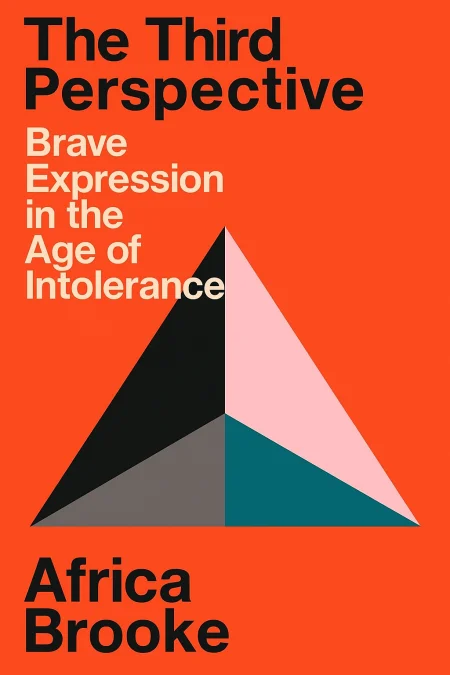
The Third Perspective
Brave Expression in the Age of Intolerance
Book Edition Details
Summary
The world is a cacophony of divided voices, but Africa Brooke offers a harmonious alternative through her provocative manifesto, *The Third Perspective*. This isn't just a guide; it's an invitation to shed the chains of echo chambers and step into a realm where critical thinking reigns supreme. With Brooke’s proven strategies, honed through coaching high-profile figures, you’ll navigate contentious topics—from politics to personal identity—with grace and authenticity. Her framework, built on Awareness, Responsibility, and Expression, empowers you to articulate your beliefs without fear, fostering genuine dialogue. Prepare to challenge your instincts, embrace vulnerability, and transform communication into a tool for connection and understanding. This is more than a book; it's a revolution in thought, promising not just to change conversations, but to reshape relationships and lives.
Introduction
In an era where public discourse has become increasingly polarized and self-censorship runs rampant, the challenge of authentic expression has never been more critical. This exploration of brave communication confronts the uncomfortable reality that many people have retreated into silence, not out of wisdom, but out of fear. The modern landscape presents a false binary: either conform to prevailing narratives or face potential ostracism. This framework challenges that dichotomy by introducing a nuanced approach to self-expression that transcends simple agreement or disagreement. The central premise revolves around the concept of a "third perspective" – a space between uncritical conformity and reckless provocatuion where thoughtful, values-driven communication can flourish. This perspective acknowledges complexity while maintaining personal integrity, allowing individuals to navigate controversial topics without sacrificing authenticity or relationships. The methodology integrates psychological insights about human behavior, practical communication strategies, and philosophical considerations about truth and social harmony. Readers will journey through a systematic process of self-discovery, examining their own patterns of self-censorship and the underlying fears that drive them. The exploration moves from internal awareness through personal responsibility to external expression, building skills progressively rather than demanding immediate transformation. This approach recognizes that brave expression is not about saying everything one thinks, but about developing the discernment to know when, how, and why to speak authentically in an increasingly intolerant world.
From Self-Censorship to Self-Awareness: Breaking the Silence
Self-censorship operates as a subtle but pervasive force in contemporary communication, distinct from external censorship in that it emerges from within rather than being imposed from outside. This internal suppression of authentic thoughts and feelings stems from learned patterns of social survival, rooted in evolutionary psychology and reinforced by modern social pressures. The biological imperative to belong to a group historically meant survival, but in today's context, this same drive often leads to the muting of individual perspectives in favor of perceived safety. The phenomenon manifests differently across individuals, ranging from complete withdrawal from controversial topics to the dilution of personal views through excessive qualifiers and preemptive apologies. Understanding these patterns requires examining the difference between thoughtful discretion and fear-based silence. True social filtering involves making conscious choices about when and how to express oneself based on context and values, while self-censorship operates from anxiety about potential consequences. The path toward awareness begins with recognizing these internal patterns and their origins. Many communication blocks trace back to early experiences of rejection or conflict, creating unconscious associations between authentic expression and social danger. The "inner mob" of critical voices often represents internalized societal expectations and past judgments, creating a constant surveillance system that monitors and restricts expression before it reaches conscious awareness. Breaking free from these patterns requires developing comfort with uncertainty and the possibility of being misunderstood. The goal is not to eliminate all caution in communication but to distinguish between wisdom-based discretion and fear-based suppression. This awareness forms the foundation for more intentional and courageous expression, allowing individuals to reclaim agency over their own voice while maintaining sensitivity to social contexts and relationships.
Values-Driven Communication: Taking Responsibility for Your Voice
Effective communication emerges from a clear understanding of one's core values and their practical application in daily interactions. Values serve as an internal compass, providing direction when external pressures attempt to sway authentic expression. This foundation enables individuals to speak from conviction rather than reactivity, creating more meaningful and impactful exchanges. The distinction between beliefs and values proves crucial here: beliefs represent current understanding that may evolve, while values reflect deeper principles that guide behavior across contexts. The responsibility aspect involves taking ownership of both the content and delivery of one's message. This includes developing awareness of personal communication styles and their effects on others. Some individuals naturally gravitate toward harmonious approaches, sometimes at the expense of honesty, while others may default to assertive or even aggressive patterns that can shut down dialogue. Understanding these tendencies allows for more intentional choices about how to engage in difficult conversations. Listening skills prove equally important in values-driven communication. The ability to hear others without immediately formulating responses creates space for genuine understanding and reduces defensive reactions. This type of listening involves more than passive reception; it requires active engagement with different perspectives while maintaining one's own center. The interplay between speaking and listening creates the foundation for meaningful dialogue even across significant disagreements. Building a strong self-reputation involves aligning external expression with internal values consistently over time. This alignment requires courage to disappoint others when their expectations conflict with personal integrity. The process involves learning to distinguish between constructive feedback and noise, accepting that misunderstanding is inevitable when taking authentic stands, and developing resilience in the face of criticism or rejection while remaining open to legitimate challenges to one's views.
Courageous Expression: Navigating Risk and Resistance
All authentic expression involves risk, but understanding the nature and extent of these risks allows for informed choices rather than paralysis. The potential costs range from mild social discomfort to significant professional or personal consequences, while the benefits include enhanced self-respect, deeper relationships, and the possibility of positive impact on others. The key lies in making conscious decisions about which risks align with one's values and goals rather than avoiding all potential negative outcomes. Courage in communication does not mean reckless expression without consideration of consequences or context. Instead, it involves thoughtful engagement with difficult topics from a place of preparation and principle. This preparation includes understanding one's own triggers and blind spots, researching topics thoroughly, and developing the emotional regulation skills necessary to maintain composure during challenging exchanges. The goal is responsive rather than reactive communication. Developing comfort with being misunderstood proves essential for courageous expression. The desire for universal approval often leads to generic statements that offend no one but also inspire no one. Accepting that some degree of misinterpretation and disagreement is inevitable when expressing authentic views frees individuals to focus on clarity of intention rather than control of reception. This acceptance does not mean abandoning efforts at clear communication but recognizing the limits of one's control over others' responses. The practice of courageous expression builds like physical fitness through consistent small acts rather than occasional dramatic gestures. Each choice to speak honestly, ask difficult questions, or maintain boundaries in the face of pressure strengthens the capacity for more significant acts of courage when they become necessary. This incremental approach allows for learning and adjustment while building confidence and skill progressively rather than demanding perfection from the beginning.
The Maverick Mindset: Creating Brave Spaces for Dialogue
The maverick mindset represents an approach to life and communication that prioritizes authenticity and independent thinking while maintaining respect for others and commitment to constructive dialogue. This mindset challenges the false choice between conformity and antagonism by demonstrating that it is possible to hold unique perspectives while building bridges rather than walls. The maverick operates from internal authority rather than external validation, making decisions based on values and evidence rather than social pressure. Creating brave spaces involves establishing environments where diverse perspectives can be shared and explored without immediate judgment or punishment. These spaces require clear agreements about engagement, including commitments to listen actively, speak honestly, and assume good faith in others. The goal is not agreement but understanding, recognizing that valuable insights often emerge from the intersection of different viewpoints rather than from echo chambers of similar thinking. The process of building these environments often begins with individual relationships and expands outward through modeling and invitation. By consistently demonstrating respectful engagement with different viewpoints, mavericks create permission for others to share their authentic thoughts. This modeling includes showing curiosity about opposing views, acknowledging uncertainty when appropriate, and maintaining composure during disagreement. These behaviors signal safety for others to take similar risks. The ultimate objective extends beyond personal expression to contribute to broader cultural change toward greater tolerance for complexity and nuance. This contribution happens through countless small interactions where individuals choose understanding over winning, curiosity over certainty, and connection over correctness. Each person who develops these capacities becomes a catalyst for others, creating ripple effects that can transform communities and organizations toward greater openness and authentic dialogue.
Summary
The path to brave expression in an intolerant age requires a fundamental shift from fear-based communication to values-driven engagement with the world. The third perspective offers a framework for navigating the false binaries that dominate contemporary discourse, providing tools for maintaining authenticity while building rather than burning bridges. The methodology demonstrates that courage in communication develops through practice and preparation rather than spontaneous inspiration, requiring systematic attention to both internal awareness and external skills. Most importantly, this approach reveals that individual acts of authentic expression, however small, contribute to the larger project of creating a more tolerant and nuanced society where diverse perspectives can coexist and inform each other rather than compete for dominance.
Related Books
Download PDF & EPUB
To save this Black List summary for later, download the free PDF and EPUB. You can print it out, or read offline at your convenience.
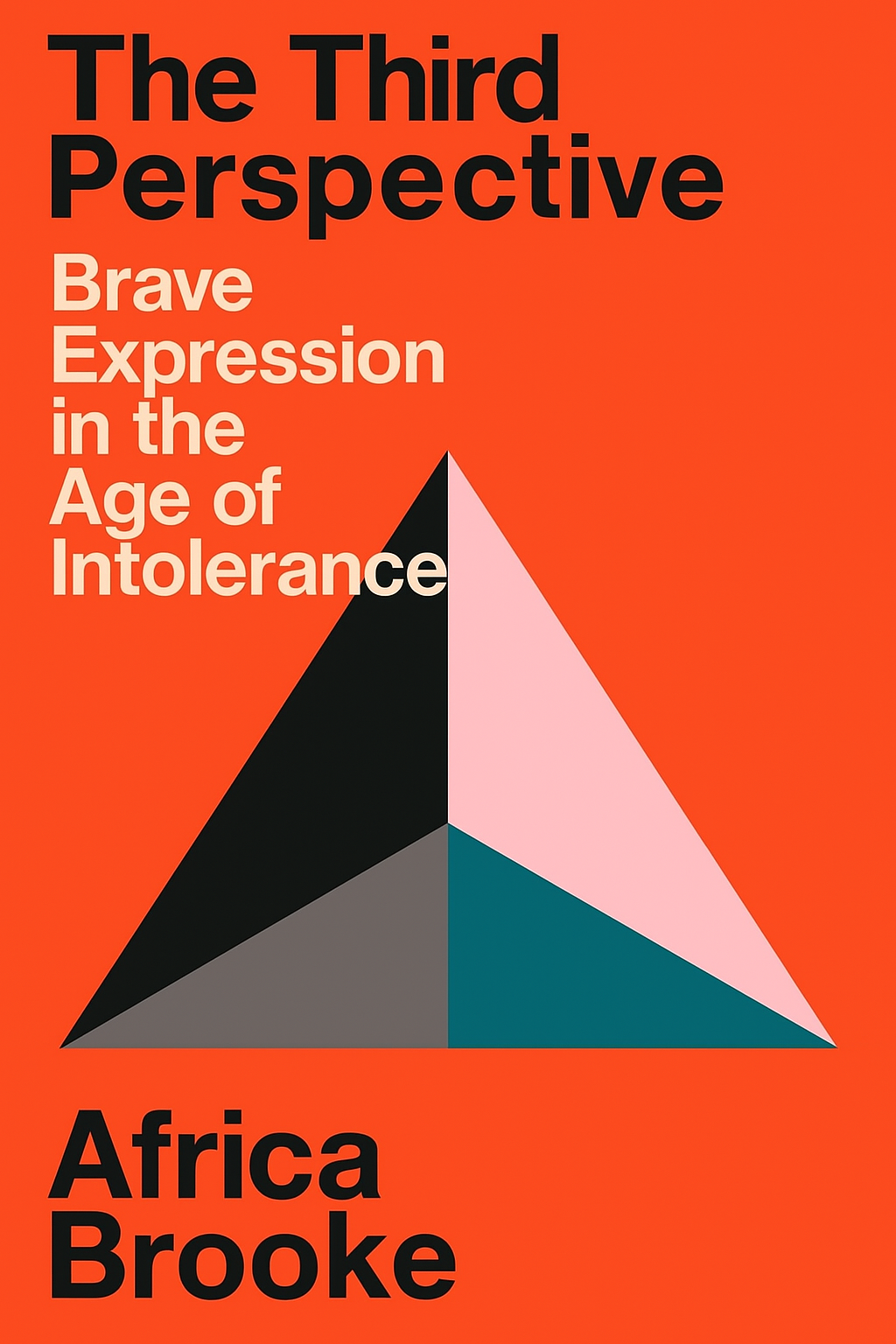
By Africa Brooke
