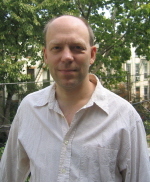
Greg Grandin
Greg Grandin, a distinguished historian and Professor at New York University, has intricately woven his scholarly pursuits with a profound examination of America's past and its enduring impact on contemporary society. His academic journey began at Brooklyn College, CUNY, culminating in a PhD from Yale University. Grandin's career is marked by a relentless commitment to uncovering the complexities of historical narratives, a dedication that extends beyond academia through his contributions to international justice, notably his role in the United Nations Truth Commission investigating the Guatemalan Civil War. His insightful writings have graced the pages of esteemed publications such as The New York Times and the London Review of Books, enhancing his reputation as a leading voice in historical discourse. Grandin's oeuvre is a testament to his prowess in intertwining historical inquiry with literary narrative. His acclaimed book, "Fordlandia," a Pulitzer Prize, National Book Award, and National Book Critics Circle Award finalist, offers a penetrating exploration of Henry Ford's ill-fated utopian venture in the Amazon. Meanwhile, "The Empire of Necessity" garnered accolades from luminaries such as Toni Morrison, who deemed it "compelling, brilliant, and necessary." This work delves into the harrowing tale of a slave-ship revolt, which later inspired Herman Melville's "Benito Cereno." Grandin's bibliography further includes "Empire's Workshop," "The Last Colonial Massacre," and "The Blood of Guatemala," each contributing to a nuanced understanding of imperialism, revolution, and the human condition. Renowned for his erudite and narrative-driven style, Grandin engages readers with a blend of meticulous research and evocative prose. His works are not merely historical accounts but profound reflections on themes of power, resistance, and the often tumultuous journey toward justice. As a historian, Grandin's contributions extend beyond the written word, offering a lens through which to view history's intricate tapestry and its resonance in the present day.


by Greg Grandin
by Brian Merchant
by Margaret Heffernan
by Edward Klein
by Liz Primeau
by Jane E. Dutton, Monica C. Worline, Raj Sisodia
by John Bevere
by Anna Goldfarb
by Anne Lamott
by Sam Quinones
