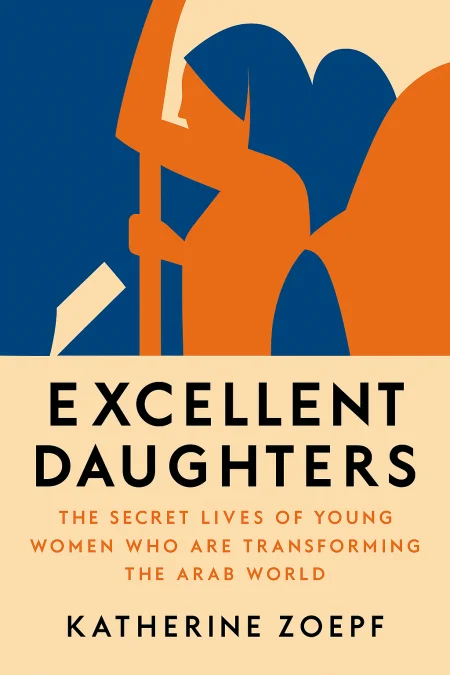
Excellent Daughters
The Secret Lives of Young Women Who Are Transforming the Arab World
Book Edition Details
Summary
In the heart of the Arab world, where tradition and modernity collide, a silent revolution brews. Katherine Zoepf's "Excellent Daughters" pulls back the veil on the untold stories of young Arab women, caught in the crossfire of change. Once defined solely by marriage, these women are now charting new territories—outnumbering men in universities, challenging societal norms, and sparking movements that demand a new societal order. From the driving protests in Saudi Arabia to the echoes of Tahrir Square, Zoepf paints a vivid tapestry of resilience and defiance. Here, in this compelling narrative, the voices of these extraordinary women rise, offering a raw, insider’s glimpse into their fight for autonomy in a world that has long silenced them.
Introduction
In the heart of Damascus, a seventeen-year-old girl named Enas memorized the entire Quran before her tenth birthday, then dedicated herself to teaching younger children the sacred verses. Her story, like those of countless other young Arab women across the Middle East, challenges every assumption about female voices in one of the world's most traditional societies. From the bustling streets of Cairo to the guarded compounds of Riyadh, a generation of women has been quietly rewriting the rules of what it means to be Arab, Muslim, and female in the twenty-first century. These are not the voiceless victims often portrayed in Western media, nor are they simply rebelling against their heritage. Instead, they represent something far more complex and powerful: young women navigating between deep religious conviction and modern ambition, between family honor and personal dreams, between ancient traditions and revolutionary change. Through their experiences, we glimpse the profound transformation reshaping the Arab world from within. Their journeys reveal how education becomes empowerment, how faith can fuel activism, and how the most significant revolutions often begin not in the streets, but in the quiet moments when a young woman decides her voice matters.
Between Tradition and Modernity: Coming of Age
Growing up in today's Arab world means inhabiting multiple realities simultaneously. For young women like Reem in Saudi Arabia, childhood ends abruptly with the adoption of the abaya and the beginning of gender segregation. Yet these same women attend universities in record numbers, master multiple languages, and dream of careers their grandmothers could never have imagined. The transition from girl to woman has become increasingly complex, no longer simply marked by marriage but by a series of educational and professional milestones. In Syria, before the civil war transformed everything, girls like Enas found themselves at the intersection of profound religious education and modern academic achievement. They memorized ancient texts while studying biotechnology, wore traditional headscarves while debating contemporary politics. This generation learned to code-switch effortlessly between worlds, speaking the language of tradition with their families while embracing global connectivity through social media and international education. The coming-of-age experience varies dramatically across the region, from the strict segregation of Saudi Arabia to the relative freedoms of Lebanon. Yet common threads emerge: the weight of family expectations, the pull of religious devotion, and an unprecedented access to education and information. These young women are not simply caught between tradition and modernity; they are actively creating new ways of being that honor both their heritage and their aspirations. Their adolescence unfolds in walled gardens both literal and metaphorical, protected spaces where they can explore ideas and forge friendships away from public scrutiny. Within these bounds, they develop the confidence and skills that will later enable them to challenge boundaries and expand possibilities for future generations.
Breaking Barriers: Education, Work, and Independence
Education has become the great equalizer for Arab women, the pathway through which they have begun to reshape their societies from within. In country after country, young women now outnumber men in universities, excelling in fields from medicine to engineering to Islamic jurisprudence. This academic achievement represents more than personal success; it signals a fundamental shift in how these societies value and invest in female potential. The pursuit of careers has opened unexpected avenues for independence. Women like Randa, who left Syria to become a flight attendant in the Gulf, discovered that professional success could provide not just financial independence but also a new sense of identity and agency. These pioneering women often become the primary breadwinners for their families, fundamentally altering traditional power dynamics while still navigating cultural expectations about honor and reputation. Work abroad has become particularly transformative. Young women from across the Arab world now migrate to the Gulf states for employment opportunities, experiencing for the first time what it means to live independently, make decisions without seeking permission, and compete in professional environments based on merit rather than connections. This mobility comes with costs—isolation from family, cultural displacement, and sometimes the painful realization that returning home means sacrificing newly acquired freedoms. The economic empowerment of women has ripple effects throughout Arab society. Families begin to see daughters as investments rather than burdens. Traditional notions of guardianship and protection are tested when women prove capable of supporting themselves and their relatives. Each woman who successfully navigates professional life creates a template for others to follow, gradually expanding the realm of possibility for future generations.
Revolution and Resistance: Women in the Arab Spring
When revolution swept across the Arab world in 2011, women were not merely participants but often catalysts and leaders. In Egypt, it was Asmaa Mahfouz's YouTube video that helped spark the massive protests in Tahrir Square. Across the region, young women who had been politicized through their struggles for education and employment rights found themselves at the forefront of demands for broader democratic change and human dignity. The eighteen days of Egyptian revolution offered a glimpse of what gender equality might look like. Women like Hadir, who defied her conservative family to join the protests, experienced for the first time what it felt like to be treated as equal citizens rather than protected dependents. The absence of sexual harassment during those initial weeks of protest created a temporary utopia where women could occupy public space as full participants in political life. However, the backlash was swift and brutal. The forced virginity tests conducted on female protesters by Egyptian military forces represented an attempt to silence women's political voices by attacking their honor and dignity. Young women like Samira Ibrahim, who courageously fought these practices in court, embodied the intersection of personal trauma and political resistance that characterized the post-revolutionary period. The revolution's aftermath revealed how deeply gendered the struggle for democratic change would be. In Egypt, the rise of Islamist parties led to renewed debates about women's appropriate role in society. In Syria, women's participation in protests was more constrained from the beginning due to the regime's violent response. Yet across the region, the experience of revolution politicized a generation of women who had tasted equality and would not easily accept its withdrawal.
New Horizons: Redefining Identity and Future
Today's young Arab women are redefining what it means to be both authentically Arab and authentically modern. They are creating new models of identity that integrate religious faith with professional ambition, family loyalty with personal independence, and cultural pride with global connectivity. These syntheses are not without tension, but they represent genuine innovation rather than simple adoption of Western models. The marriage patterns of this generation reflect their changing priorities and expanded options. Women are marrying later, if at all, and are more likely to negotiate the terms of their relationships. Some, like the Saudi women working in retail, are discovering that economic independence provides leverage in family dynamics they never expected. Others are using religious education and Quranic interpretation to argue for greater rights and freedoms from within Islamic frameworks. Technology has become a crucial tool for this generation, enabling them to connect across national boundaries, share experiences, and organize for change. Social media platforms allow them to create virtual communities that transcend the physical limitations of gender segregation. Online spaces become laboratories for testing new ideas about identity, relationships, and social responsibility. The future these women are creating is neither a wholesale rejection of tradition nor an uncritical embrace of globalization. Instead, they are crafting hybrid identities that allow them to be dutiful daughters and ambitious professionals, devout Muslims and global citizens, respectful of their heritage while actively expanding its boundaries. Their success in navigating these complex negotiations offers hope for a more inclusive and dynamic Arab world.
Summary
The young Arab women whose stories fill these pages represent one of the most significant yet underreported transformations in the contemporary world. Their quiet revolution proceeds not through dramatic confrontation but through the accumulated power of individual choices: to study, to work, to speak, to dream beyond the boundaries their mothers accepted. In their courage to inhabit multiple identities simultaneously, they offer a model for navigating the tensions between tradition and change that characterize our globalized world. Their experiences teach us that meaningful social transformation rarely follows the dramatic narratives we expect from revolutionary movements. Instead, it emerges from the daily negotiations of ordinary people who refuse to accept that they must choose between honoring their heritage and pursuing their aspirations. These women remind us that the most profound changes often begin in the private sphere, in the quiet moments when someone decides that their voice matters, their dreams are valid, and their contributions are necessary. Their stories inspire anyone seeking to understand how individuals can create change within complex and seemingly immutable systems, and how the next generation often finds ways to honor the past while creating space for a more expansive future.
Related Books
Download PDF & EPUB
To save this Black List summary for later, download the free PDF and EPUB. You can print it out, or read offline at your convenience.
By Katherine Zoepf
