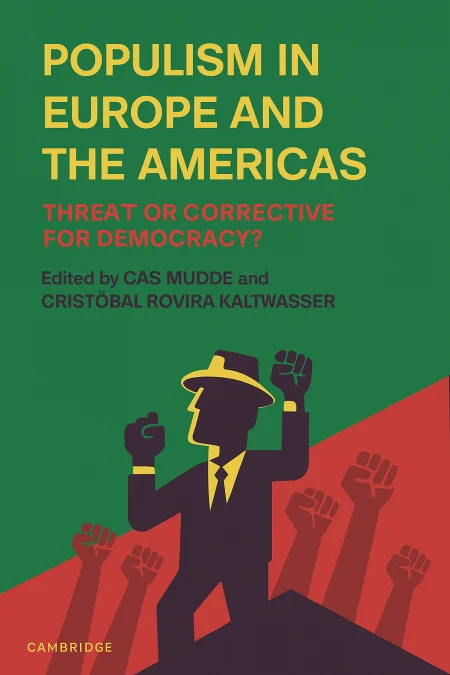
Populism
A Very Short Introduction
byCas Mudde, Cristóbal Rovira Kaltwasser
Book Edition Details
Summary
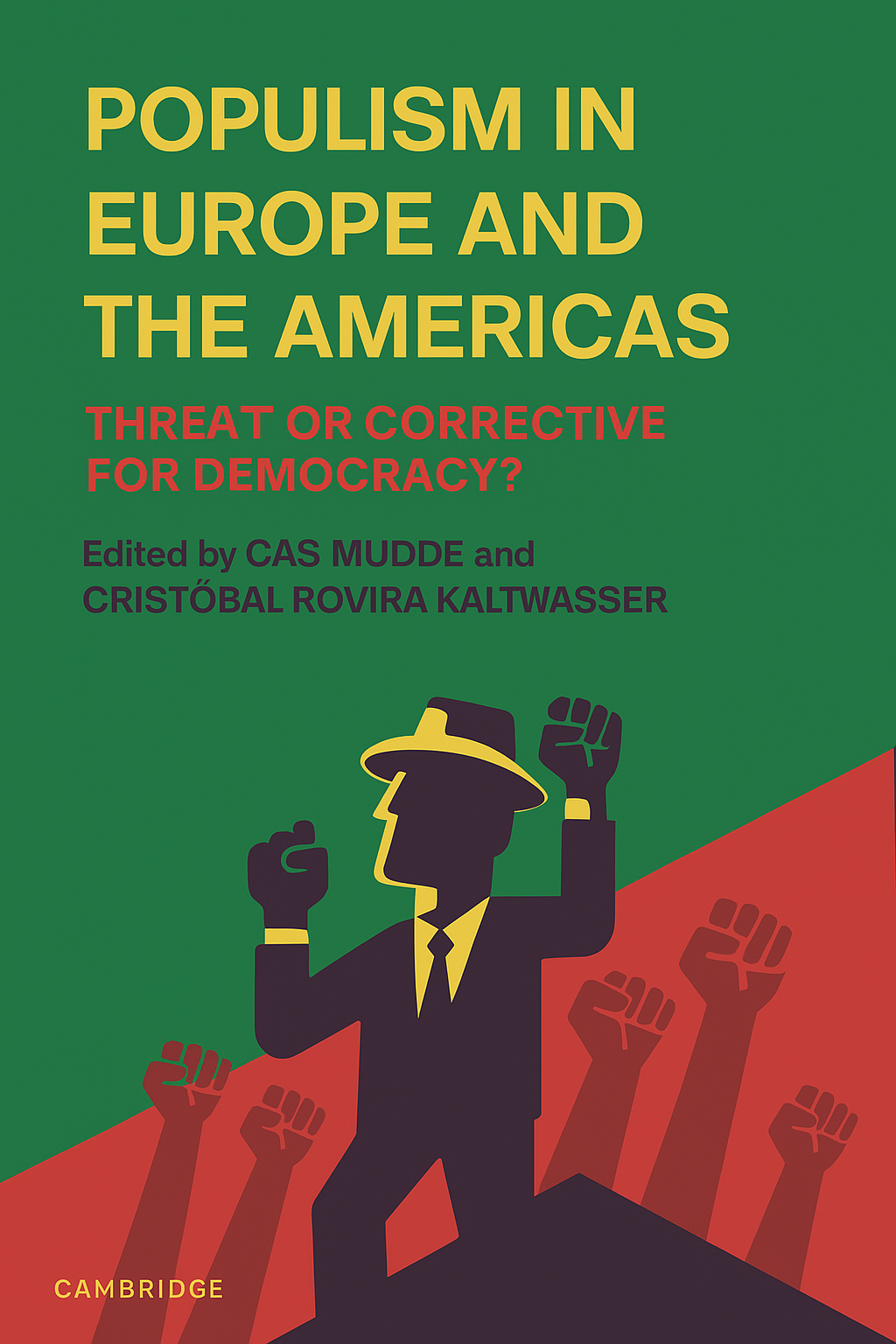
Politics on both sides of the Atlantic have been shaken to their core by a force that's as divisive as it is unifying: populism. This groundbreaking volume offers a panoramic view of this phenomenon, transcending borders to scrutinize its dual nature as both a danger and a potential remedy to democracy itself. A mosaic of insights from Europe and the Americas reveals surprising parallels between populism's left and right wings, exposing a shared skepticism of liberal democratic norms while not opposing democracy outright. By dissecting the rhetoric of leaders who claim to champion "the people" against an elite scapegoat, this book sheds light on the volatile undercurrents shaping today's political landscapes. Prepare for a thought-provoking exploration that challenges preconceptions and uncovers the nuanced roles populism plays on the global stage.
Introduction
Political discourse across the globe has witnessed the rise of a phenomenon that challenges traditional distinctions between left and right, democracy and authoritarianism. This ideological force operates as a mental map through which millions interpret political reality, yet its true nature remains widely misunderstood. Rather than representing a coherent political program, populism functions as what scholars term a "thin-centered ideology" that necessarily attaches itself to other belief systems to gain political traction. The complexity of populism lies in its fundamental duality: it simultaneously champions democratic principles while undermining liberal democratic institutions. This paradox emerges from populism's core assertion that society divides into two homogeneous camps—the pure people versus the corrupt elite—and that politics should express the unmediated general will of the people. Such a framework inevitably creates tension with pluralist democracy's emphasis on institutional checks, minority rights, and political compromise. Understanding populism requires moving beyond simplistic characterizations that dismiss it as mere demagoguery or emotional manipulation. Instead, careful analysis reveals how populist actors exploit genuine democratic deficits and respond to real grievances, even as their proposed solutions often threaten the very democratic values they claim to defend. This examination traces populism's varied manifestations across different political contexts, its relationship with democratic governance, and the complex challenges it presents to contemporary political systems.
Defining Populism as Thin-Centered Ideology: People, Elite, and General Will
Populism emerges as a distinct ideological framework centered on three core concepts that together create a coherent worldview about political authority and legitimacy. Unlike thick ideologies such as liberalism or socialism that offer comprehensive answers to fundamental political questions, populism provides only a skeletal framework that must attach itself to other ideological elements to form viable political projects. The concept of "the people" serves as populism's central organizing principle, though this category proves remarkably flexible in practice. Populist movements typically invoke three overlapping interpretations: the people as sovereign democratic actors, the common people defined by socioeconomic status and cultural values, and the people as a national community bound by shared identity. These interpretations allow populist leaders to construct inclusive or exclusive definitions of legitimate political membership depending on their specific political context and objectives. "The elite" functions as populism's necessary antagonist, defined primarily through moral rather than purely economic or social criteria. This corrupt establishment encompasses political leaders, economic powerholders, cultural influencers, and media figures who allegedly work against the people's interests. The moral dimension proves crucial because it allows populist leaders to maintain their anti-establishment credentials even after gaining significant political power or wealth themselves. The notion of general will, borrowed from Rousseau's political philosophy, completes populism's ideological structure by asserting that the people's collective judgment is both transparent and morally superior to elite decision-making. This concept fundamentally challenges representative democracy's premise that political authority requires mediation through institutions, parties, and constitutional constraints. Instead, populism advocates for direct expression of popular sovereignty, often through mechanisms like referenda, mass rallies, and plebiscitary leadership that bypass traditional democratic intermediaries.
Global Manifestations and Diverse Forms of Populist Mobilization
Populist movements across different regions demonstrate remarkable adaptability while maintaining core ideological consistency. In North America, populism has evolved from the agrarian movements of the late nineteenth century through various incarnations including the anti-communist mobilization of the Cold War era and contemporary movements like the Tea Party and Occupy Wall Street. These manifestations consistently pit heartland values against coastal elite corruption, though their specific policy prescriptions vary dramatically. Latin American populism reveals the ideology's capacity to combine with different host ideologies across historical periods. The region has experienced three distinct waves: the early twentieth-century incorporation movements that merged populism with nationalism, the neoliberal populism of the 1990s that attacked state bureaucracies while implementing market reforms, and the contemporary radical left variant that combines populist discourse with socialist economics and indigenous rights activism. European populism emerged more recently but has proven equally diverse, ranging from the populist radical right parties that combine populism with nativism and authoritarianism to left-wing movements that merge populist appeals with anti-austerity politics. These movements exploit frustrations with European integration, immigration, and economic globalization while maintaining the core populist distinction between corrupt elites and pure people. The global spread of populism reflects common underlying tensions between democratic ideals and contemporary governance realities. Economic globalization, supranational institutions, and technocratic governance have created gaps between popular expectations and institutional capacity that populist movements exploit. However, the specific form populism takes in each context depends heavily on local political cultures, institutional structures, and the particular grievances that populist entrepreneurs choose to mobilize around.
The Complex Relationship Between Populism and Liberal Democracy
Populism maintains an inherently ambivalent relationship with democratic governance that defies simple characterization as either pro-democratic or anti-democratic. This complexity stems from populism's simultaneous embrace of democratic principles like popular sovereignty and majority rule alongside its rejection of liberal constraints on majoritarian power such as minority rights, judicial independence, and constitutional limitations. The tension becomes apparent when examining populism's impact across different stages of political development. During processes of democratization, populist movements often serve as positive forces by mobilizing excluded groups, challenging authoritarian rule, and demanding greater political participation. Historical examples include opposition movements in communist Eastern Europe and democratization struggles in Latin America where populist rhetoric helped articulate demands for popular sovereignty against entrenched authoritarian regimes. However, populism's relationship with established liberal democracies proves more problematic. Populist actors in power frequently attack independent institutions like courts, regulatory agencies, and media organizations that constrain majoritarian rule, arguing that such institutions serve elite interests rather than popular will. This institutional erosion can gradually undermine democratic quality even while maintaining electoral competition, creating what scholars term "competitive authoritarian" regimes. The democratic danger emerges from populism's monist conception of legitimate political authority, which struggles to accommodate political opposition, policy disagreement, and institutional complexity. Populist logic suggests that genuine popular will should be transparent and unified, making political conflict appear illegitimate rather than a natural feature of pluralistic democracy. This worldview can justify attacks on opposition parties, civil society organizations, and independent media as obstacles to authentic democratic governance rather than essential components of liberal democratic systems.
Causes of Populist Success and Democratic Responses to the Challenge
Understanding populist success requires examining both demand-side factors that create popular receptivity to populist appeals and supply-side conditions that enable populist actors to mobilize effectively. Demand for populism typically emerges during periods of perceived crisis when existing institutional arrangements appear inadequate to address major challenges or when corruption scandals reveal elite self-dealing at public expense. Structural changes in contemporary societies have created conditions particularly conducive to populist mobilization. The rise of cognitive mobilization among educated publics, combined with media fragmentation and social media proliferation, has weakened traditional gatekeeping institutions while empowering political entrepreneurs who can bypass established political organizations. Economic globalization and European integration have constrained national political autonomy in ways that create gaps between popular expectations and governmental capacity. Supply-side success depends on populist actors' ability to construct credible narratives that connect diverse grievances under a unified populist framework. Effective populist leaders combine populism with host ideologies that address specific concerns while maintaining the core populist distinction between people and elite. Their success often reflects mainstream parties' convergence on centrist policies that leave significant popular concerns unaddressed. Democratic responses to populism must balance several competing considerations. Purely repressive approaches risk validating populist claims about elite conspiracy while potentially undermining democratic norms. Conversely, accommodation strategies that adopt populist rhetoric or policy positions may legitimize anti-pluralist logic. The most effective responses typically combine institutional reforms that address genuine democratic deficits with clear defense of liberal democratic principles, while avoiding both elitist dismissal of popular concerns and capitulation to anti-institutional populist demands.
Summary
Populism represents democracy's permanent shadow—a thin ideology that exploits the inherent tensions between popular sovereignty and institutional complexity in modern democratic systems. Its power derives not from offering comprehensive solutions to political problems but from providing a compelling moral framework that divides the political world into pure people and corrupt elites while promising direct expression of popular will. This ideological simplicity becomes both populism's greatest strength and its fundamental limitation, enabling broad mobilization while requiring attachment to other ideologies for practical governance. The phenomenon challenges democratic theorists and practitioners to acknowledge genuine democratic deficits while defending the institutional complexity that populism seeks to sweep away, recognizing that the tension between popular will and liberal constraints will remain a permanent feature of democratic politics rather than a problem to be definitively solved.
Related Books
Download PDF & EPUB
To save this Black List summary for later, download the free PDF and EPUB. You can print it out, or read offline at your convenience.
By Cas Mudde
