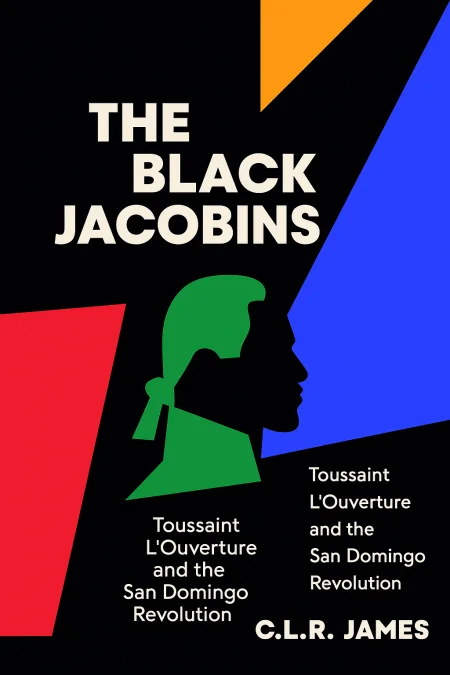
The Black Jacobins
Toussaint L’Ouverture and the San Domingo Revolution
Book Edition Details
Summary
In the crucible of revolution, the island of San Domingo ignites with an intensity that reshapes history. "The Black Jacobins" is not just a recounting of events—it's a visceral portrayal of the fierce struggle for freedom led by the enigmatic Toussaint L’Ouverture. Against the backdrop of the Haitian Revolution, a monumental uprising brews, challenging the might of French, Spanish, and English forces. This isn't a mere historical analysis; it's a gripping narrative of resilience and transformation. Trinidadian historian C. L. R. James delivers a riveting account that transcends time, inspiring liberation movements worldwide. With a fresh introduction by Professor David Scott, this edition breathes new life into a timeless tale of defiance and hope. Witness how one man's vision turned the tides of oppression, forever altering the course of a nation and the world.
Introduction
On a sweltering August night in 1791, in the mountains of Saint-Domingue, a Vodou priest named Boukman raised his voice above the thunder and declared that the gods of Africa demanded freedom. Within hours, the Caribbean's most profitable colony erupted in flames as half a million enslaved people rose in what would become the only successful slave revolution in human history. This extraordinary uprising would transform the world's understanding of human capability, racial hierarchy, and the true meaning of revolutionary ideals. The Haitian Revolution poses three profound questions that echo through history: How do the most oppressed people in society develop the consciousness and organization necessary for revolutionary change? What happens when the lofty principles of liberty and equality collide with the brutal economic realities of empire and exploitation? And perhaps most remarkably, how do individuals dismissed as subhuman by their oppressors prove themselves capable of military genius, political sophistication, and moral courage that surpasses their former masters? This epic struggle offers essential insights for anyone seeking to understand the dynamics of social transformation, the complex interplay between race and power in shaping modern history, and the remarkable capacity of human beings to transcend even the most dehumanizing circumstances. For students of revolution, scholars of human rights, and anyone inspired by stories of courage against impossible odds, this tale reveals how ordinary people can reshape the world when they refuse to accept injustice as permanent.
Colonial Exploitation and Revolutionary Seeds (1789-1791)
The French colony of Saint-Domingue in the late eighteenth century represented both the pinnacle of European colonial success and the depths of human cruelty. This Caribbean island generated more wealth than all of Britain's North American colonies combined, its sugar and coffee plantations producing nearly half the world's tropical exports. Yet this extraordinary prosperity rested entirely on the labor of half a million enslaved Africans who worked under conditions so brutal that the colony required constant replenishment through the Atlantic slave trade. The colonial society was a powder keg of competing interests and simmering resentments. At the top of the hierarchy lived roughly 40,000 white colonists who enjoyed luxuries that rivaled European aristocracy but chafed under French commercial restrictions. Below them existed 28,000 free people of color, many wealthy plantation owners themselves, who faced systematic discrimination despite their property and education. At the bottom toiled the enslaved masses, two-thirds of whom had been born in Africa and retained vivid memories of freedom. This demographic reality meant that European civilization existed as merely a thin veneer over an essentially African population that had never fully accepted its bondage. The French Revolution of 1789 shattered this precarious balance by introducing dangerous new ideas about natural rights and human equality. When revolutionary proclamations reached Saint-Domingue, they ignited fierce debates among white colonists about representation and self-governance, while free people of color demanded the citizenship rights that their status should have guaranteed. The enslaved population observed these developments with keen intelligence, understanding that their masters' world was fracturing and that revolutionary chaos might create opportunities for their own liberation. The transformation from simmering discontent to open rebellion revealed the sophisticated organizational networks that had developed within the enslaved community. Using religious ceremonies as cover, plantation leaders had created communication systems that spanned the colony, coordinated resistance activities, and prepared for the moment when they would seize their freedom by force. When that moment came on August 22, 1791, the coordinated nature of the uprising across multiple plantations demonstrated that these were not desperate people acting from blind rage, but strategic thinkers who had carefully studied their oppressors' weaknesses and planned accordingly.
Mass Uprising and Toussaint's Ascendancy (1791-1801)
The slave rebellion that erupted in August 1791 quickly evolved from a local uprising into a complex revolutionary war that would reshape the entire Caribbean. Within weeks of Boukman's call to arms, over 100,000 enslaved people had joined the rebellion, transforming the northern plains of Saint-Domingue into a battlefield where former field hands proved themselves capable of defeating professional European armies. The scale and coordination of this uprising shattered every assumption about African capabilities and slave docility, revealing organizational skills and military potential that European observers had deemed impossible. From this revolutionary maelstrom emerged Toussaint Louverture, a former coachman whose strategic brilliance would confound European generals and reshape the Atlantic world. Unlike other rebel leaders who relied primarily on guerrilla tactics, Toussaint understood that lasting freedom required not just military victory but the construction of a functioning state capable of defending itself against the great powers of Europe. His ability to transform former slaves into disciplined soldiers who could match European forces in conventional warfare represented a revolution in military affairs that challenged fundamental beliefs about racial hierarchy and human potential. Toussaint's political genius lay in his masterful navigation of the complex international situation surrounding Saint-Domingue. When France abolished slavery in 1794, he shrewdly allied with the French Republic against British and Spanish forces, using this partnership to eliminate his rivals while building his own power base. By 1798, he had expelled foreign invaders, defeated internal opponents, and established himself as the undisputed ruler of the colony. His administration proved that formerly enslaved people could govern effectively, creating schools, rebuilding infrastructure, and commanding respect from foreign diplomats who had previously dismissed black political capabilities. The constitution Toussaint promulgated in 1801, declaring himself governor-general for life, represented the logical culmination of his state-building project. This document established Saint-Domingue as an autonomous territory within the French Empire, guaranteed permanent freedom for all inhabitants, and created institutions designed to prevent slavery's return. However, this assertion of black self-governance also provided Napoleon Bonaparte with the pretext he needed to launch a massive military expedition aimed at restoring French control and, ultimately, the plantation system itself. Toussaint's greatest achievement thus became the catalyst for the final, most brutal phase of the revolutionary struggle.
Napoleon's Campaign and Haiti's Independence (1802-1804)
Napoleon's decision to reconquer Saint-Domingue and restore slavery represented one of history's great strategic miscalculations, born from racist assumptions about black military capabilities and profound misunderstanding of what the revolution had achieved. In 1802, he dispatched over 60,000 veteran troops under General Leclerc with secret orders to arrest all black leaders and reimpose the plantation system. This massive expedition represented not merely French imperial ambition but European civilization's determination to crush the most successful challenge to racial hierarchy the world had yet witnessed. The initial French assault achieved stunning success through deception and superior firepower. Toussaint himself was captured through treachery and deported to a French prison where he would die in 1803, while many of his generals defected to the French cause believing they could preserve their positions under the new regime. By mid-1802, Leclerc controlled most major towns and had seemingly broken the backbone of black resistance. However, this apparent victory proved illusory as yellow fever began decimating European troops and news arrived that Napoleon had restored slavery in other French colonies, making his ultimate intentions unmistakably clear. The revelation of Napoleon's true plans transformed what had been a confused political struggle into a war of racial survival. Under the leadership of Jean-Jacques Dessalines, Toussaint's most capable lieutenant, the revolution entered its most radical phase. Dessalines possessed none of Toussaint's diplomatic subtlety but understood with brutal clarity that there could be no compromise with slavery. His leadership galvanized black resistance and united former enemies in a desperate struggle against re-enslavement, demonstrating that the revolution's ideals had taken root too deeply to be easily uprooted. The final campaign of 1803 witnessed extraordinary displays of courage and tactical brilliance as black forces systematically expelled the remaining French troops. When the last European soldiers surrendered in November 1803, they left behind a transformed Caribbean and a new nation that would be called Haiti. On January 1, 1804, Dessalines proclaimed independence, creating the world's first black republic and dealing a devastating blow to the entire system of Atlantic slavery. This victory proved that enslaved people could not only win their freedom but defend it against the mightiest military forces of their age, forever changing global understanding of human potential and the possibilities for social transformation.
Summary
The Haitian Revolution exposed the fundamental contradiction at the heart of the Age of Revolution: the tension between universal ideals of human rights and the economic realities of racial exploitation. While European and American revolutionaries proclaimed that all men were created equal, they simultaneously depended on slave labor to finance their enlightened societies. It required enslaved Africans in Saint-Domingue to reveal this hypocrisy and demonstrate that the principles of liberty and equality, if genuinely applied, must extend to all humanity regardless of race or previous condition. This extraordinary struggle offers three essential lessons for contemporary movements seeking social transformation. First, lasting change requires both moral clarity about fundamental principles and strategic flexibility in methods, building coalitions when possible while never compromising core demands for justice. Second, oppressed peoples must be prepared to defend their achievements through organized resistance, as privileged classes never surrender power voluntarily and will use every means available to restore their dominance. Third, successful revolutions must articulate visions of human dignity that transcend narrow group interests and appeal to universal principles that can inspire solidarity across traditional divisions. For anyone engaged in struggles against injustice today, the Haitian Revolution demonstrates that those whom society deems least capable of greatness often possess the moral courage and practical wisdom necessary to reshape the world. The enslaved people of Saint-Domingue proved that no system of oppression, however entrenched or profitable, can permanently suppress the human desire for freedom and dignity. Their victory reminds us that revolutionary change remains possible when ordinary people refuse to accept inequality as natural and organize themselves with the determination to create a more just world, regardless of the obstacles they face.
Related Books
Download PDF & EPUB
To save this Black List summary for later, download the free PDF and EPUB. You can print it out, or read offline at your convenience.
By C.L.R. James
