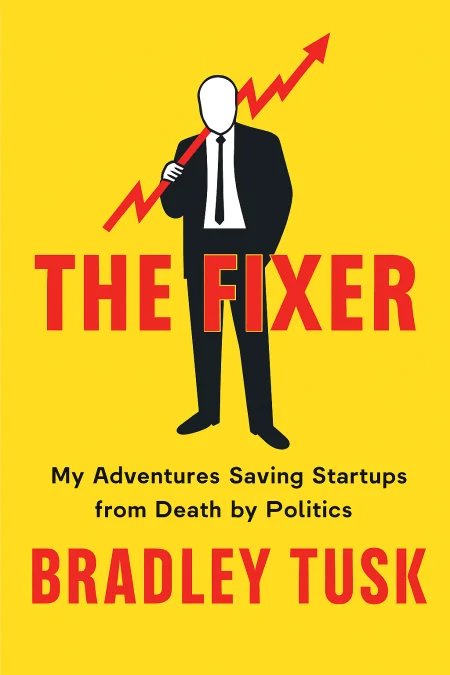
The Fixer
Saving Startups from Death by Politics
Book Edition Details
Summary
In the high-stakes arena where innovation crashes headlong into regulation, "The Fixer" unveils the untold tales of Bradley Tusk, the political maestro who turns insurmountable barriers into stepping stones for startups. Renowned for his strategic wizardry with giants like Uber, Lemonade, and FanDuel, Tusk dismantles the red tape that throttles progress. With anecdotes that pull back the curtain on battles with entrenched industries—from taxis to insurance and casinos—Tusk’s narrative is a masterclass in the art of the political maneuver. Here, ambition meets opposition, and the only path forward is to outwit, outplay, and outlast the status quo. For entrepreneurs ready to learn the ruthless dance of disruption, Tusk's insights are both a shield and a sword in the relentless quest for innovation.
Introduction
Picture this: You've built the next revolutionary app that could transform an entire industry. Your users love it, investors are throwing money at you, and tech blogs are calling you the future. Then one morning, you wake up to find a government regulator has just banned your service entirely. Sound familiar? This scenario plays out more often than you might think in the startup world. The harsh reality is that every successful startup eventually faces a political reckoning. Whether you're disrupting transportation, housing, finance, or any established industry, the incumbents you're threatening won't just compete on merit—they'll use their political connections to shut you down. The taxi industry didn't try to build better apps to compete with Uber; they lobbied politicians to ban ridesharing altogether. Hotel chains didn't improve their customer experience to match Airbnb; they pushed for regulations to make home-sharing illegal. This book reveals the hidden battlefield where startups actually win or lose: the world of politics and regulation. You'll discover how to turn your customers into a political army that can overwhelm entrenched interests, master the art of knowing when to ask permission versus when to beg for forgiveness, and learn to navigate the complex web of city halls, state capitals, and federal agencies that can make or break your business. Most importantly, you'll understand that in the modern economy, having the best technology isn't enough—you need to know how to fight the political war that determines whether you'll be allowed to compete at all.
When Travis Fought Bill: The Uber vs. de Blasio Battle
The call came at the worst possible moment. Travis Kalanick was stuck at Dallas-Fort Worth airport when New York City Mayor Bill de Blasio dropped a political bombshell that threatened to destroy Uber's global expansion. The mayor had just announced legislation to cap Uber's growth at one percent per year—effectively killing the company's business model in the world's most visible city. "If it happens in New York, the whole world is going to see it," Travis told his political strategist. "Which means it could happen anywhere. We can't let that happen." The stakes couldn't be higher. Losing New York would signal to regulators worldwide that even the most successful tech companies could be stopped by local politics. But fighting City Hall seemed impossible—the mayor controlled the city council completely, and conventional wisdom said you simply couldn't win against such entrenched power. The breakthrough came from understanding de Blasio's fatal weakness. The mayor portrayed himself as a champion of minorities and working-class New Yorkers, but his attack on Uber directly contradicted this narrative. Most Uber drivers were immigrants and people of color trying to earn better livings than traditional taxi driving allowed. More importantly, Uber had solved a problem that plagued minority communities for decades—taxi drivers refusing to pick up passengers based on their skin color. When you order an Uber, the driver can't see your race before accepting the ride. Uber launched a campaign that attacked de Blasio from the left, something no one had ever tried before. Their television ads featured immigrant drivers asking why the mayor was trying to take away their livelihoods. They highlighted riders from outer boroughs who talked about being ignored by yellow taxis because of their skin color. Most brilliantly, they added a "de Blasio" option to the Uber app that showed a twenty-five-minute wait time, then explained the mayor's legislation and let users contact their city council members with one tap. Within days, the political dynamics completely shifted. The mayor found himself defending the interests of wealthy taxi medallion owners against immigrant drivers and minority riders. More than 250,000 Uber customers contacted their council members in a single week—an unprecedented level of grassroots political engagement. Council members who had been prepared to rubber-stamp the mayor's legislation suddenly found themselves bombarded by constituents demanding they vote no. The bill was quietly withdrawn, and Uber's model was validated for the world to see. This battle revealed a fundamental truth about modern politics: politicians respond to pressure from voters far more than pressure from lobbyists. When you can mobilize your customers to become political advocates, you can overcome even the most entrenched opposition. The key is understanding that most politicians aren't ideologically committed to stopping innovation—they're simply responding to the loudest voices they hear. If your customers can become louder than your competitors' lobbyists, you can win fights that seem impossible.
Learning the Language of Politics: From Rendell to Bloomberg
A chance encounter at the 1992 Democratic Convention changed everything. A college freshman working as a cabana boy stumbled into a conversation with Philadelphia Mayor Ed Rendell, who was sitting alone in Madison Square Garden watching obscure speakers address an nearly empty arena. What started as small talk about school and Bill Clinton's presidential chances ended with an impromptu job offer: "Are you busy when you get back to school? Do you want to be an intern in our office?" When the promised follow-up letter never came, most people would have given up. Instead, the young man took a train to Philadelphia City Hall and simply walked into the mayor's office asking to see Rendell. The bewildered secretaries, unsure whether they were dealing with a protestor or someone genuinely confused about how government works, took a message. Twenty minutes later, Mayor Rendell called personally: "When are you coming to work?" This early experience revealed the first cardinal rule of politics: nothing happens unless you make it happen. Politicians are surrounded by people who tell them what they want to hear, but they desperately need someone willing to take initiative and solve problems. That internship led to working for the legendary Henry Stern at New York City's Parks Department, where outrageous publicity stunts taught another crucial lesson. Stern would dress as a groundhog and pop out of the ground for Groundhog Day, or chain himself to trees to protest illegal cutting. The media loved it, which gave Parks far more influence than its small budget would normally allow. The lesson was profound: in politics, attention equals power. If you can control the narrative and generate compelling stories, you can punch far above your weight. This principle later proved crucial when working for Senator Chuck Schumer, whose relentless pursuit of media coverage—including Sunday press conferences on topics as mundane as breakfast cereal prices—kept him constantly in the public eye and gave him outsized influence despite being a junior senator. The real education came during the September 11 attacks, when political theater gave way to genuine leadership. Watching politicians from both parties work together in the immediate aftermath showed what government could accomplish when people focused on solving problems instead of scoring points. But it also revealed how rare such moments are. Most of the time, politicians are trapped by their need for constant validation and reelection, which makes them predictable if you understand their motivations. Understanding political psychology is like having a master key to government. Politicians aren't driven by ideology or policy preferences nearly as much as by their desperate need to stay in office and maintain relevance. Once you realize that their seemingly irrational decisions make perfect sense when viewed through the lens of electoral survival, you can anticipate their moves and craft strategies that work with their incentives rather than against them.
Creating the Tech-Politics Playbook: FanDuel to Lemonade
The fantasy sports industry learned the hardest way possible that ignoring politics is a luxury successful startups can't afford. FanDuel and DraftKings were so focused on their death match with each other that they completely missed the gathering storm of opposition from casinos, state attorneys general, and moral crusaders. When a scandal broke alleging insider trading, both companies faced potential extinction in thirty-nine states almost overnight. The crisis began with a New York Times story about a DraftKings employee who allegedly used insider information to win $350,000 on FanDuel. Within days, attorneys general across the country launched investigations, Nevada kicked both companies out entirely, and the fantasy sports industry found itself fighting for survival. The companies had been spending hundreds of millions on advertising but only $75,000 annually on lobbying—roughly the cost of hiring one decent lobbyist for half a year in a single state. The solution required treating politics like a startup challenge: move fast, scale quickly, and mobilize resources others couldn't match. FanDuel assembled an all-star advisory board including former Homeland Security Secretary Tom Ridge and former U.S. Attorney Michael Garcia to demonstrate they were taking the crisis seriously. They hired a former attorney general to conduct an internal investigation and developed comprehensive self-regulatory standards that went beyond anything required by law. Most importantly, they turned their five million customers into a political movement. Unlike traditional advocacy groups that struggle to mobilize members, daily fantasy players were already engaged on the companies' mobile apps multiple times per day. When FanDuel explained the political threat and provided one-click tools to contact legislators, nearly half a million customers took action. State representatives who typically received a dozen phone calls about controversial issues suddenly faced hundreds of contacts from constituents demanding they support fantasy sports. The campaign succeeded because it aligned the companies' business interests with genuine consumer demand. Fantasy sports players weren't just customers—they were voters who would be genuinely angry if politicians took away something they loved. The companies registered new voters, tracked which legislators supported or opposed them, and even organized get-out-the-vote efforts for friendly candidates. By the end of the 2017 legislative session, they had passed legislation in fifteen states and established the template for how tech companies could fight back against political attacks. This playbook works because it recognizes a fundamental shift in political power. Traditional lobbying assumes that politicians respond primarily to campaign contributions and insider relationships. But in an era where anyone can instantly communicate with thousands of people, companies that can mobilize genuine grassroots pressure have a decisive advantage. The key is ensuring your customers care enough about your service to become political advocates—and making it incredibly easy for them to take action when it matters most.
Summary
The central truth of startup politics is elegantly simple: in any jurisdiction with democratic elections, companies that can mobilize their customers to political action can defeat even the most entrenched opposition through pure democratic pressure. Master the fundamental strategic choice that determines success or failure. Ask yourself whether you're facing regulators who might be reasonable versus corrupt systems that require political warfare. When the system can be worked with, invest in relationships and demonstrate good faith compliance. When you're facing pay-to-play corruption or regulatory capture, go directly to the public and turn your opponent's political influence into a liability by calling it out loudly and repeatedly. Transform your customers from users into advocates by making political engagement as seamless as using your product. Build advocacy tools directly into your platform so users can contact politicians without leaving your app. Track which officials support or oppose you and make that information visible to users in their districts. Remember that most people will ignore political issues that don't affect them personally, but they'll fight hard to protect services that improve their daily lives. Your competitive advantage isn't just having better technology—it's having customers who will vote against politicians who try to take that technology away from them.
Related Books
Download PDF & EPUB
To save this Black List summary for later, download the free PDF and EPUB. You can print it out, or read offline at your convenience.
By Bradley Tusk
