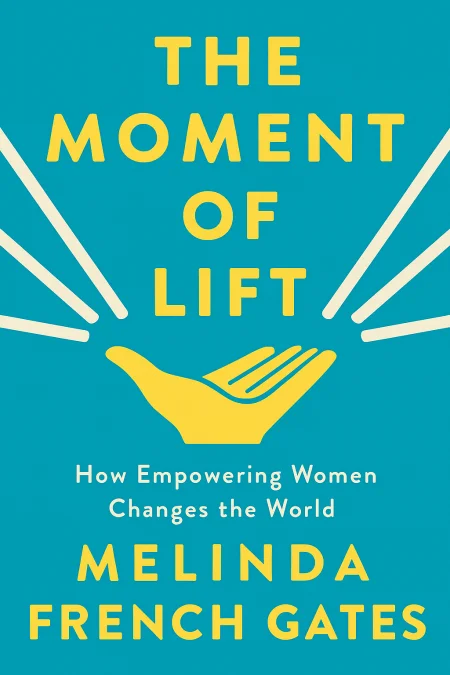
The Moment of Lift
How Empowering Women Changes the World
Book Edition Details
Summary
From the heart of global philanthropy, Melinda Gates emerges with a clarion call that resounds across continents: gender equity is the key to societal transformation. In her first book, Gates unveils her journey from a behind-the-scenes partner to a formidable advocate for women's rights. Drawing from two decades of fieldwork and intimate dialogues with women worldwide, she reveals the undeniable truth: societies flourish when women are empowered. Gates' narrative is a tapestry of poignant stories, compelling data, and practical solutions, urging us all to champion change. With unyielding conviction, she tackles pressing issues—from family planning to gender equality in the workplace—proving that when women rise, humanity soars.
Introduction
In the bustling corridors of Microsoft during the late 1980s, a young computer science graduate from Duke University was quietly breaking barriers in what was then an overwhelmingly male-dominated tech industry. Melinda French Gates, as she would later become known, represented a new generation of women entering the technology sector with both technical prowess and business acumen. Her journey from software product manager to global philanthropist embodies one of the most remarkable transformations in modern philanthropy, where personal privilege meets profound purpose. Born into a middle-class Catholic family in Dallas, Texas, Melinda's early exposure to both technology and social justice through her education at Ursuline Academy would shape her worldview in ways she couldn't have imagined. Her nine-year tenure at Microsoft, culminating in her role managing over 1,700 employees, provided her with invaluable leadership experience and the financial resources that would later enable unprecedented global impact. However, it was her marriage to Bill Gates and their subsequent philanthropic partnership that would catapult her onto the world stage as one of the most influential advocates for women and girls globally. Through Melinda's story, readers will discover the evolution of a technology executive into a passionate advocate for gender equality, the strategic thinking behind one of the world's largest philanthropic endeavors, and the personal insights that emerge when immense privilege is channeled toward addressing humanity's greatest challenges.
From Microsoft Executive to Global Philanthropist
Melinda's transformation from corporate executive to global changemaker began with a profound encounter with inequality during a 1993 trip to Africa with Bill. Walking through impoverished communities, she witnessed scenes that would haunt and inspire her for decades: mothers carrying multiple burdens while men walked unburdened, children fending for themselves in dangerous conditions, and women working tirelessly with no opportunity for advancement or education. These observations planted seeds of awareness about gender inequality that would later bloom into focused philanthropic action. The establishment of the Bill & Melinda Gates Foundation in 2000 marked the beginning of Melinda's second career, though initially she chose to work behind the scenes while Bill served as the public face. Her approach was methodical and data-driven, spending years learning about global health challenges, meeting with experts, and most importantly, traveling extensively to understand the lived experiences of people the foundation aimed to serve. These early learning trips were transformative, particularly her encounters with women in family planning clinics in Malawi and maternal health centers in India. What distinguished Melinda's philanthropic approach was her insistence on listening directly to those most affected by the problems they sought to solve. Unlike traditional top-down charity models, she prioritized understanding the perspectives of women and girls who were often overlooked in development conversations. This listening-first approach led to crucial insights about the interconnected nature of global challenges, from maternal mortality to economic empowerment. The evolution from silent partner to co-equal leader of the foundation represented both personal growth and strategic necessity. By 2014, Melinda had found her voice as a public advocate, authoring influential pieces in academic journals and taking on controversial topics like family planning that put her at odds with some traditional religious teachings. This transition required courage, as it meant accepting public criticism and navigating complex political landscapes while maintaining focus on evidence-based solutions.
Discovering Women's Voices Through Foundation Work
Through her extensive field work, Melinda uncovered a fundamental truth that would reshape the foundation's entire approach: addressing global poverty and health challenges required centering women and girls in all solutions. This revelation came not from academic research but from countless conversations with women who shared their struggles and dreams. In Niger, she met mothers like Sadi Seyni, who explained how family planning transformed not just her health but her family's economic prospects. In India, she encountered women farmers whose agricultural productivity was constrained not by lack of skill but by systemic gender barriers. These experiences taught Melinda that women's empowerment wasn't just a moral imperative but the most effective strategy for addressing multiple global challenges simultaneously. When women could control the timing and spacing of their pregnancies, maternal and child mortality decreased. When girls stayed in school longer, entire communities became more prosperous. When women had access to financial services and agricultural resources, food security improved for entire families. This interconnected understanding became the foundation's organizing principle. Melinda's work revealed how gender bias operates as both a cause and consequence of poverty. She observed how cultural norms that devalued women's contributions led to underinvestment in their capabilities, which then reinforced stereotypes about women's lesser capacity. Breaking these cycles required addressing both the structural barriers that limited women's opportunities and the cultural narratives that justified their exclusion. This dual approach became central to the foundation's strategy across all program areas. The process of discovering these truths required Melinda to confront her own privileges and assumptions. As a wealthy, educated white woman from America, she had to learn how to engage authentically with women whose life experiences differed dramatically from her own. This involved developing cultural humility, learning to ask better questions, and recognizing when to step back and amplify others' voices rather than leading conversations herself.
Building Equal Partnership in Marriage and Mission
One of the most compelling aspects of Melinda's story is her candid account of creating an equal partnership with one of the world's most powerful men. When she married Bill Gates in 1994, she entered a relationship with someone accustomed to being the final decision-maker in most situations. Building equality required ongoing negotiation, clear communication about roles and expectations, and mutual commitment to sharing both power and responsibility. The evolution of their professional partnership mirrored their personal journey toward equality. Initially, Bill was the primary public spokesperson for their foundation while Melinda worked behind the scenes. However, this arrangement gradually shifted as both recognized that her voice and perspectives were essential to their mission's credibility and effectiveness. The transition wasn't always smooth, involving difficult conversations about credit, recognition, and decision-making authority that many couples navigate in less public circumstances. Melinda's approach to building partnership involved both assertiveness and strategic patience. She chose her battles carefully, gradually expanding her role and influence while maintaining focus on their shared goals. Key moments, like their first co-authored annual letter and her decision to become a public advocate for family planning, required her to push beyond her comfort zone while also requiring Bill to adapt his long-held ways of working and leading. Their partnership became a model for how couples can maintain individual identities and expertise while building something larger together. Rather than dividing territories, they chose to share knowledge and decision-making across all areas of their work. This approach strengthened both their relationship and their foundation's effectiveness, as it ensured that multiple perspectives informed every major decision. The success of their partnership demonstrates that equality doesn't mean identical roles but rather mutual respect, shared power, and complementary contributions toward common goals.
Leading the Movement for Gender Equality Worldwide
Melinda's emergence as a global leader on gender equality required her to navigate complex political, cultural, and religious sensitivities while maintaining unwavering focus on evidence-based solutions. Her decision to become a public advocate for family planning, despite opposition from some within her Catholic Church, exemplified the moral courage required to champion unpopular but necessary causes. She learned to frame controversial issues in terms of human rights and public health rather than ideology, building broader coalitions of support. Her leadership style combined data-driven analysis with deep empathy and cultural sensitivity. Rather than imposing Western solutions on global problems, Melinda invested in understanding local contexts and supporting indigenous leadership. Her work with organizations like Tostan in Senegal demonstrated how lasting change requires community ownership and culturally appropriate approaches to challenging harmful traditional practices. Through initiatives like the London Family Planning Summit and FP2020, Melinda helped mobilize billions of dollars in global commitments to expand women's access to contraceptives. These efforts required sophisticated diplomatic skills, as she worked with government leaders, religious authorities, and grassroots organizations to build consensus around shared goals. Her ability to bridge different constituencies became one of her greatest strengths as an advocate. Melinda's platform as one of the world's wealthiest women came with both opportunities and responsibilities that she navigated thoughtfully. She used her privilege to amplify voices that might otherwise go unheard, while also recognizing the limitations of outside intervention in local communities. Her leadership demonstrated how those with power and resources can support social change movements without co-opting or undermining indigenous leadership and expertise.
Summary
Melinda Gates embodies the profound truth that privilege becomes meaningful only when channeled toward expanding opportunities for others, particularly those who have been systematically excluded from power and recognition. Her journey from Microsoft executive to global advocate illustrates how personal transformation and social change are inextricably linked, requiring both individual courage and collective action to challenge entrenched inequalities. Her life offers two essential lessons for anyone seeking to create positive change in the world. First, effective leadership requires deep listening and cultural humility, particularly when working across lines of difference in power, culture, and experience. The most innovative solutions often come from those closest to the problems, not from outside experts or wealthy benefactors. Second, sustainable progress on complex global challenges requires addressing root causes rather than just symptoms, which often means confronting uncomfortable truths about how systems of power perpetuate inequality and injustice. Melinda's story will resonate most strongly with readers interested in understanding how philanthropy can be a force for systemic change, those navigating the challenges of building equal partnerships in marriage or professional relationships, and anyone seeking to use their own privileges and platforms to advance social justice. Her example demonstrates that meaningful impact requires both strategic thinking and moral courage, along with the willingness to evolve one's understanding and approach based on new evidence and perspectives.
Related Books
Download PDF & EPUB
To save this Black List summary for later, download the free PDF and EPUB. You can print it out, or read offline at your convenience.
By Melinda French Gates
