
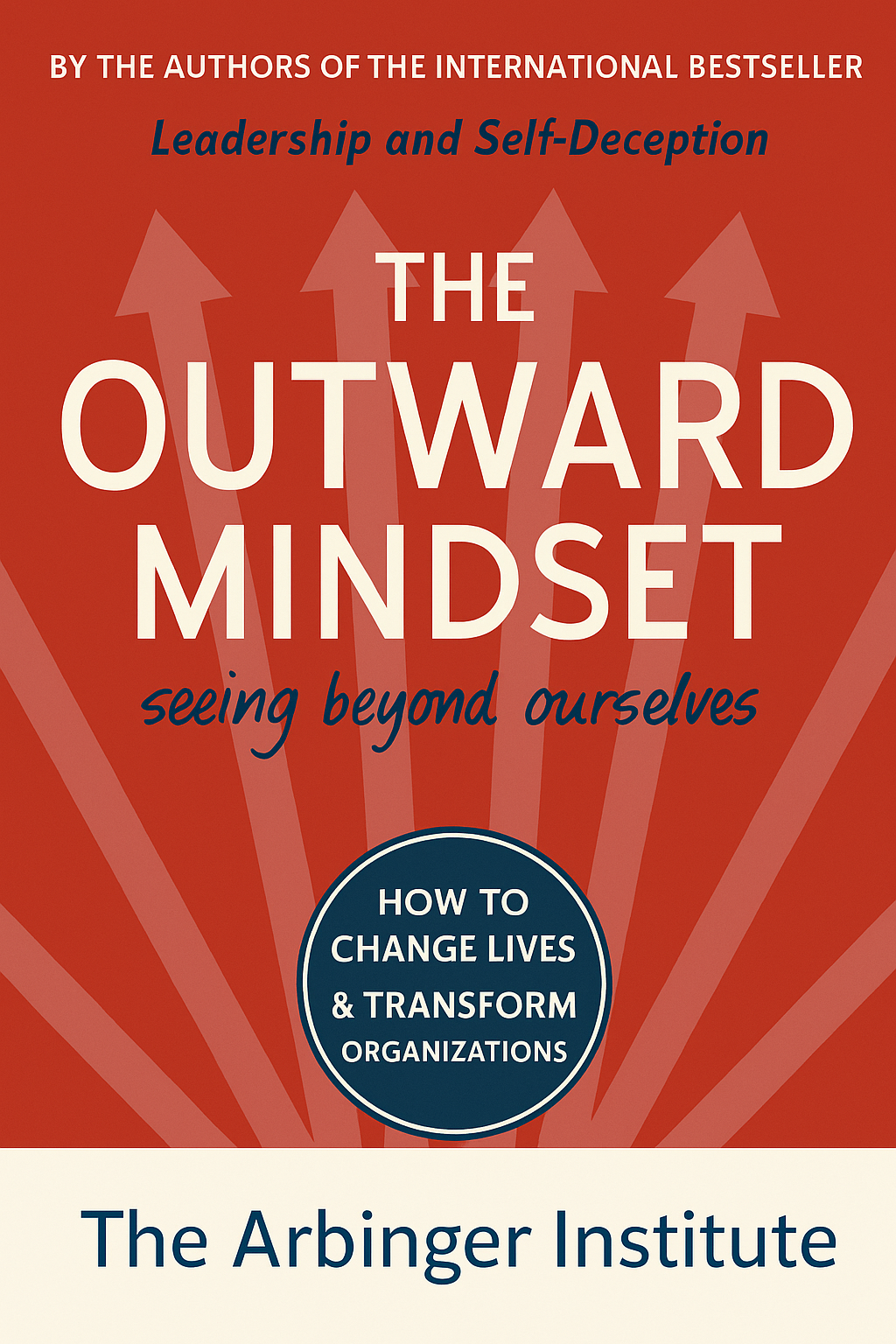
The Outward Mindset
Seeing Beyond Ourselves: How to Change Lives & Transform Organizations
Book Edition Details
Summary
Hidden within the fabric of our daily interactions lies a profound choice: to focus inwardly or to extend our gaze outward. "The Outward Mindset" by The Arbinger Institute unravels this pivotal decision with groundbreaking clarity and insight. This isn't just a guide—it's a transformative manifesto that redefines how we perceive ourselves in relation to others. By shifting from a self-centered perspective to one that embraces the needs and aspirations of those around us, individuals and organizations can ignite a cascade of creativity, accountability, and authentic engagement. Through powerful narratives and compelling research, the book unveils a path to collective transformation, showing how altering our mindset can forge deeper connections and drive meaningful change. Embrace the potential to reshape your world, not just for yourself, but in harmony with others.
Introduction
Why do some leaders inspire extraordinary performance while others struggle to motivate even basic compliance? Why do certain teams naturally collaborate while others remain trapped in silos and blame? The answer lies not in what people do, but in how they fundamentally see the world around them. This book introduces the revolutionary concept of mindset as the primary driver of behavior and results, distinguishing between an inward mindset that focuses on self-preservation and an outward mindset that sees and responds to the needs of others. The authors present a systematic framework for understanding how our way of seeing others either as people or as objects determines our effectiveness in every sphere of life. This theoretical foundation challenges conventional approaches to leadership development and organizational change by addressing the root cause rather than surface behaviors. The book explores how mindset shapes everything from individual performance to organizational culture, offering a scientific yet practical methodology for transformation. Through this lens, readers will discover why traditional change efforts fail and how genuine transformation begins with a fundamental shift in perspective that enables people to see beyond themselves and create collective success.
The Mindset Foundation: Inward vs Outward Orientation
The fundamental theory underlying human behavior rests on a simple yet profound distinction between two primary orientations toward the world. An inward mindset represents a self-focused way of seeing that treats others as objects to be used, obstacles to overcome, or irrelevant factors in achieving personal objectives. An outward mindset, conversely, recognizes others as people with their own legitimate needs, challenges, and objectives that deserve consideration and respect. This theoretical framework operates on multiple levels of human interaction. At the cognitive level, mindset determines what information we notice and how we interpret events around us. Those with an inward orientation filter reality through the lens of personal benefit or threat, while those with an outward orientation remain open to the full complexity of situations involving multiple stakeholders. At the emotional level, mindset governs our feelings toward others, influencing whether we experience empathy and connection or defensiveness and justification. At the behavioral level, mindset shapes our choices about how to act, determining whether we seek win-win solutions or pursue zero-sum outcomes. The power of this theoretical distinction becomes evident in organizational settings where the collective mindset determines culture and performance. When team members operate from an inward mindset, they create environments of competition, blame, and dysfunction, regardless of formal structures or stated values. When an outward mindset prevails, the same individuals in identical circumstances naturally collaborate, innovate, and achieve extraordinary results. Consider how a SWAT team transformed from a source of community complaints to a model of professional service simply by shifting from seeing citizens as adversaries to recognizing them as people deserving respect and protection. This mindset change required no new training programs or policy revisions, yet produced dramatic improvements in both effectiveness and community relations.
The Outward Mindset Pattern: See, Adjust, Measure
The practical application of outward mindset theory follows a systematic three-step pattern that can be implemented by individuals, teams, and entire organizations. This SAM methodology provides a repeatable process for maintaining an others-focused orientation even in challenging circumstances. The pattern begins with See, requiring deliberate effort to understand the needs, objectives, and challenges of those we serve or work alongside. This step demands moving beyond assumptions and actually investigating what matters to others from their perspective. The second component, Adjust, involves modifying our efforts based on what we discover about others' needs. This adjustment process requires creativity, flexibility, and often the courage to abandon comfortable routines in favor of approaches that better serve collective objectives. The adjustment phase transforms seeing into action, ensuring that increased awareness leads to behavioral change. The final element, Measure, establishes feedback loops to determine whether our adjusted efforts are actually helping others achieve their objectives rather than simply making us feel good about our intentions. This pattern creates a dynamic system of continuous improvement that prevents the static thinking characteristic of inward mindset approaches. Unlike rigid behavioral prescriptions that attempt to manage people as objects, the SAM pattern empowers individuals to think creatively about their impact on others and adapt their approach based on real results. Consider how Ford Motor Company's leadership team applied this pattern during their corporate turnaround. By seeing each other's challenges clearly through weekly reporting sessions, adjusting their efforts to provide mutual support, and measuring their collective impact on company performance, they transformed a failing enterprise into an industry leader. The pattern enabled them to move beyond individual heroics toward genuine collaboration that multiplied their effectiveness.
Building Outward Cultures: Systems and Leadership Practices
Creating sustainable outward mindset cultures requires more than individual transformation; it demands systematic alignment of organizational structures, processes, and leadership practices with others-focused principles. This theoretical framework recognizes that systems designed to manage objects will inevitably undermine efforts to treat people as people, regardless of stated intentions or training programs. Therefore, building outward cultures necessitates redesigning organizational DNA to support and reinforce outward mindset behaviors at every level. Leadership practices must model the very mindset they seek to cultivate throughout the organization. This begins with leaders who demonstrate genuine humility by collapsing artificial distinctions between themselves and others, sharing the same cafeterias, following the same rules, and treating frontline employees with the same respect accorded to senior executives. Such leaders position people to be fully responsible rather than treating them as objects to be managed, empowering individuals to think creatively about their roles and impact rather than simply executing predetermined tasks. Systems alignment involves examining every organizational process through the lens of how it affects human dignity and empowerment. Performance measurement systems, for example, must evaluate impact on others rather than merely individual achievement, preventing the zero-sum competition that destroys collaboration. Communication structures must facilitate genuine seeing across organizational boundaries, enabling people to understand and respond to each other's needs. Consider how a debt collection company revolutionized their industry by redesigning their entire business model around helping debtors find employment rather than simply extracting payments. Their systems supported outward mindset behaviors by measuring success through client job placements rather than collection rates, creating a sustainable competitive advantage based on genuine service. This systematic approach demonstrates how outward cultures emerge not from motivational speeches but from thoughtful alignment of every organizational element with the fundamental principle of seeing and serving others.
Summary
The ultimate insight of outward mindset theory reveals that extraordinary performance emerges not from superior individual talent or innovative strategies, but from the fundamental shift in seeing others as people rather than objects. This transformation unlocks human potential by creating environments where collaboration replaces competition, innovation flourishes through collective intelligence, and sustainable results emerge from genuine service to others. The theory provides both the conceptual framework for understanding human motivation and the practical methodology for creating cultures that consistently achieve excellence while honoring human dignity and potential.
Related Books
Download PDF & EPUB
To save this Black List summary for later, download the free PDF and EPUB. You can print it out, or read offline at your convenience.
By The Arbinger Institute
