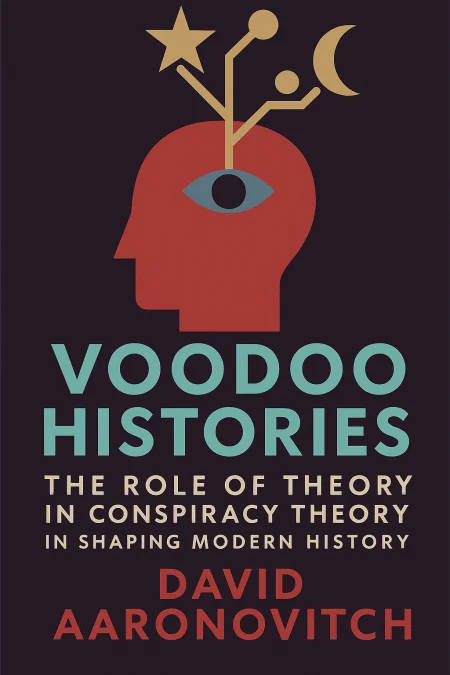
Voodoo Histories
The Role of the Conspiracy Theory in Shaping Modern History
Book Edition Details
Summary
Conspiracies weave their allure with shadows and whispers, a siren's call to those who seek hidden truths in the fabric of history. David Aaronovitch, with his incisive wit and sharp eye for detail, peels back the layers of some of the most persistent myths of our time. From the tragic demise of Princess Diana to the moon landing's supposed fiction, he methodically dismantles these intricate stories, exposing the flimsy foundations of selective "evidence" and dubious scholarship. But why do these tales captivate so many? "Voodoo Histories" doesn't just debunk; it delves deep into the psyche that hungers for the extraordinary, the unseen. A must-read for anyone who has found themselves navigating the murky waters of conspiracy chatter, this book stands as a beacon of clarity and reason.
Introduction
In the smoky aftermath of World War I, as empires crumbled and millions grappled with unprecedented devastation, a peculiar document began circulating through the drawing rooms of European high society. The Protocols of the Elders of Zion promised to explain everything—why the world had been turned upside down, who was truly pulling the strings, and what dark forces shaped human destiny. It was a forgery, crafted by Russian secret police decades earlier, yet it would go on to influence the course of the twentieth century in ways its creators never imagined. This remarkable journey from fabricated text to historical force reveals something profound about how conspiracy theories operate in modern society. They don't simply reflect our fears and prejudices—they actively shape political movements, justify terrible acts, and alter the trajectory of nations. From the show trials of Stalin's Soviet Union to the paranoid atmosphere of McCarthyism, from the assassination of President Kennedy to the digital echo chambers of our current age, conspiracy theories have provided both comfort and catastrophe, offering simple explanations for complex realities while often making those realities far more dangerous. Understanding this phenomenon isn't merely an academic exercise. In our current age of information abundance and institutional distrust, the patterns revealed in these historical episodes offer crucial insights into how societies can lose their grip on shared truth. This exploration is essential for anyone seeking to navigate our contemporary landscape of competing narratives and alternative facts, where the lessons of the past have never been more relevant to the challenges of the present.
Forged Foundations: Anti-Semitic Conspiracies and Modern Paranoia (1903-1940s)
The year 1903 marked the birth of modern conspiracy culture when Russian secret police fabricated The Protocols of the Elders of Zion, a document that would poison minds across continents for generations. Cobbled together from earlier fictional works, including a French novel about Napoleon III and a German potboiler featuring scheming Jews, this patchwork of plagiarized paranoia found eager audiences across the Western world as the old order collapsed in the wake of World War I. The Protocols succeeded because they offered a seductive explanation for modernity's discontents. Rather than grappling with the complex forces of industrialization, nationalism, and social change, readers could blame a single, identifiable enemy. In Britain, The Times initially treated it as potentially authentic, while American industrialist Henry Ford spent millions promoting the document, and German academics incorporated it into university curricula. The forgery provided what one contemporary observer called "the veritable Rosetta Stone of history," suddenly making sense of everything that had previously seemed random or inexplicable. The document's appeal lay not in its factual accuracy but in its psychological utility. It transformed feelings of powerlessness into a sense of enlightened resistance, converted complex historical processes into simple moral dramas, and offered community and purpose to individuals who felt alienated by rapid social change. The Protocols established the basic grammar of modern conspiracy theory: the idea that surface events mask hidden machinations, that coincidences are actually connections, and that skeptics are either naive or complicit. The consequences of this manufactured clarity were devastating. The Protocols became a warrant for genocide, inspiring pogroms in Russia, providing intellectual justification for the Holocaust, and continuing to circulate in the Middle East long after their fraudulent origins had been exposed. The document's persistence demonstrates how conspiracy theories, once released into the world, develop a life of their own, adapting to new circumstances while maintaining their essential appeal to those seeking simple answers to complex questions.
Cold War Mind Games: McCarthyism to Kennedy Assassination Myths (1950s-1980s)
The atomic age transformed conspiracy thinking from a marginal phenomenon into a mainstream political force, as the very real existence of government secrecy programs and intelligence operations lent credibility to theories about hidden manipulation. Senator Joseph McCarthy's crusade against Communist infiltration in the 1950s demonstrated how conspiracy theories could capture mainstream attention and reshape national policy, destroying careers based on little more than guilt by association while creating a climate of suspicion that lasted for years. The assassination of President John F. Kennedy in 1963 marked a watershed moment in American conspiracy culture. The shocking nature of the event, combined with the apparent randomness of Lee Harvey Oswald's act, created a psychological void that conspiracy theories rushed to fill. Within hours of the shooting, alternative explanations began circulating, suggesting involvement by the CIA, the Mafia, Cuban agents, or shadowy government forces. The Warren Commission's conclusion that Oswald acted alone satisfied few Americans, who found it difficult to believe that such a momentous event could result from the actions of a single, disturbed individual. What emerged was a new form of conspiracy thinking that differed markedly from earlier versions. Rather than focusing on ethnic or religious minorities as the source of hidden plots, these theories targeted the American government itself. Books and films popularized the idea that official investigations were cover-ups, and that ordinary citizens needed to conduct their own research to uncover the truth. This shift reflected broader changes in American society, as trust in institutions eroded following Vietnam and Watergate. The Kennedy assassination theories established patterns that would dominate conspiracy thinking for decades. They introduced the concept of selective evidence interpretation, the idea that witness testimony could be manipulated to support predetermined conclusions, and the notion that the absence of evidence was itself evidence of a cover-up. These intellectual tools would prove remarkably durable, creating belief systems that were essentially immune to refutation and setting the stage for even more elaborate theories in the digital age.
Digital Age Delusions: 9/11 Truth and Internet-Driven Conspiracism (1990s-2000s)
The internet revolutionized conspiracy theories, transforming them from marginal beliefs shared in newsletters and late-night radio shows into global phenomena that could reach millions instantly. The September 11, 2001 attacks provided the perfect catalyst for this new form of digital conspiracism, with alternative theories suggesting government involvement circulating online within hours of the towers falling, demonstrating how the internet's democratization of information could paradoxically lead to greater confusion rather than clarity. The 9/11 Truth movement revealed the fundamental flaws in digital-age conspiracy thinking. Websites and self-proclaimed researchers presented themselves as conducting rigorous investigation, but their methods exposed dangerous patterns: cherry-picking evidence, ignoring expert testimony that contradicted their theories, and treating speculation as fact. When structural engineers explained why the Twin Towers collapsed, truthers dismissed them as part of the cover-up. When air traffic controllers described the chaos of that morning, their accounts were reinterpreted as evidence of a stand-down order. The movement attracted an unlikely coalition of supporters, from left-wing anti-war activists to right-wing libertarians, united by their distrust of official narratives. This political diversity masked an underlying similarity in thinking patterns, as believers shared a common conviction that surface events concealed deeper machinations. The internet allowed these diverse groups to find each other and reinforce their beliefs, creating echo chambers where dissenting voices were quickly marginalized and algorithms fed users increasingly extreme content that reinforced their existing beliefs. Perhaps most significantly, the 9/11 Truth movement established conspiracy thinking as a form of political activism. Believers saw themselves not as cranks or extremists, but as patriots seeking to expose government crimes and prevent future atrocities. This self-perception gave the movement moral urgency and helped it recruit supporters who might otherwise have been skeptical of conspiracy theories. The result was a new form of political engagement based not on traditional ideological divisions, but on competing versions of reality itself, preparing the ground for even more polarized conflicts over truth in democratic societies.
Democratic Dilemma: Psychology and Politics of Contemporary Conspiracy Belief
The persistence of conspiracy theories across cultures and centuries reveals they fulfill deep psychological needs that rational argument alone cannot address. At their core, these beliefs offer what chaos and uncertainty cannot: a sense of order, meaning, and control. When faced with traumatic events like assassinations, terrorist attacks, or economic collapses, conspiracy theories provide comprehensive explanations that restore a sense that the world operates according to comprehensible, if hidden, rules. The social function of conspiracy theories becomes clear when examining who believes them and when. They typically flourish among groups that feel politically or culturally displaced, offering a way to explain defeat or marginalization that preserves self-esteem. Rather than accepting that their ideas may be unpopular or their leaders incompetent, believers can attribute their losses to the machinations of powerful conspirators. This psychological comfort comes at a steep price: it discourages the kind of self-reflection and adaptation that might actually improve their political fortunes. Modern democratic societies face particular challenges in combating conspiracy theories because the very openness that defines democracy can be turned against itself. Freedom of speech protects conspiracy theorists' right to spread their ideas, while freedom of information laws provide endless fodder for suspicious minds seeking hidden connections. The digital revolution has amplified these challenges exponentially, creating what researchers call "confirmation bias on steroids" as online platforms enable like-minded individuals to find each other regardless of geographic distance. The stakes of this phenomenon extend far beyond academic interest. Conspiracy theories have real political consequences, from the McCarthyism of the 1950s to contemporary election disputes. They can undermine public health campaigns, erode trust in democratic institutions, and even inspire violence. Understanding the psychological and social forces that drive conspiracy thinking is therefore not just an intellectual exercise, but a practical necessity for anyone hoping to preserve rational discourse and social cohesion in democratic societies.
Summary
Throughout the past century, conspiracy theories have revealed themselves to be far more than mere curiosities or symptoms of individual paranoia. They represent a fundamental challenge to how democratic societies process information, make decisions, and maintain social cohesion. From the fabricated Protocols of the Elders of Zion to contemporary claims about government involvement in major events, these beliefs follow remarkably consistent patterns that transcend political and cultural boundaries, offering simple explanations for complex realities while actively reshaping those realities in dangerous ways. The central paradox of conspiracy thinking lies in its promise to reveal hidden truths while actually obscuring genuine understanding. By transforming uncertainty into false certainty, complexity into artificial clarity, and random tragedy into purposeful design, conspiracy theories provide psychological comfort at the expense of intellectual honesty. This transformation serves important emotional needs, but it comes at the cost of our ability to engage effectively with reality and maintain the shared commitment to truth that democratic societies require to function. The digital age has not created conspiracy thinking, but it has supercharged its spread and impact, making the development of intellectual immunity more crucial than ever. This requires not just better critical thinking skills, but also a deeper understanding of the psychological needs these theories fulfill and the social conditions that make them appealing. Only by addressing both the intellectual and emotional dimensions of conspiracy belief, while working to rebuild trust in legitimate institutions and expertise, can we hope to preserve rational discourse in our increasingly complex and interconnected world.
Related Books
Download PDF & EPUB
To save this Black List summary for later, download the free PDF and EPUB. You can print it out, or read offline at your convenience.
By David Aaronovitch
