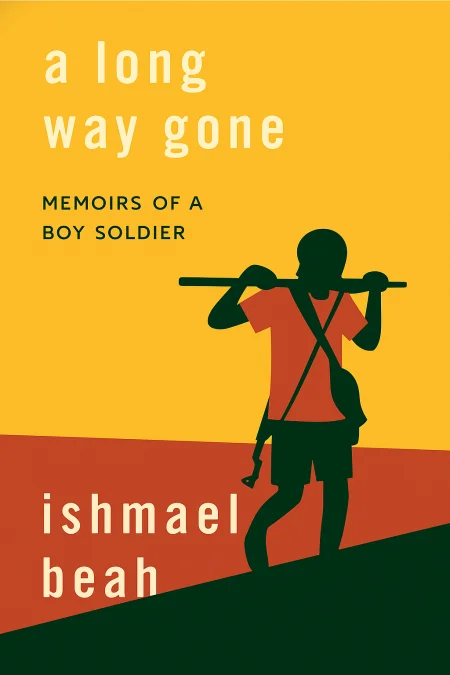
A Long Way Gone
Memoirs of a Boy Soldier
Book Edition Details
Summary
In the heart of Sierra Leone's brutal civil war, a young boy's innocence is shattered. At twelve, Ishmael Beah escapes marauding rebels only to stumble into a nightmare of gunfire and chaos. Ensnared by the government army at thirteen, he is thrust into a world where childhood is devoured by the ravenous jaws of conflict, and survival demands the unthinkable. A Long Way Gone is Beah’s haunting memoir, a tapestry of raw memory and resilience woven with heartbreaking honesty. As he navigates a landscape transformed by violence, readers are drawn into his struggle to reclaim humanity amidst the dehumanizing horrors of war. This powerful narrative offers a rare glimpse into the life of a child soldier, an unflinching account that challenges the reader to confront the realities of conflict through the eyes of a boy who once held a gun—and now holds a pen.
Introduction
In the emerald hills of Sierra Leone, a twelve-year-old boy once danced to American rap music, dreaming of talent shows and schoolyard friendships. Within months, that same child would be clutching an AK-47, his innocence forever shattered by one of Africa's most brutal civil wars. Ishmael Beah's transformation from carefree village boy to hardened soldier, and ultimately to international advocate for peace, represents one of the most harrowing yet hopeful human stories of our time. His journey through unimaginable darkness and back into light reveals the devastating impact of war on children while simultaneously demonstrating the remarkable resilience of the human spirit. Through Beah's extraordinary account, readers encounter a narrative that challenges our understanding of childhood, survival, and redemption. His story illuminates how quickly normal life can collapse into chaos, how children can be both victims and perpetrators of violence, and how healing remains possible even after the deepest wounds. From the forests of West Africa to the halls of the United Nations, Beah's path offers profound insights into the nature of trauma, the power of storytelling, and the enduring capacity for human beings to rebuild their lives from ashes.
Childhood Lost: From Village Boy to War's Embrace
The war came to Ishmael Beah not as a distant thunder but as an immediate, devastating reality that shattered his world in a single afternoon. Just days before, he had been living the ordinary life of a Sierra Leonean teenager, absorbed in hip-hop music, school friendships, and the universal concerns of adolescence. His greatest worry was perfecting dance moves for upcoming talent shows, his head filled with lyrics from American rap songs that connected him to a wider world beyond his village. When Beah left home with his brother Junior and friends for what should have been a simple trip to perform at a talent show, neither he nor his family imagined it would be their final goodbye. The attack on his hometown of Mogbwemo occurred with shocking swiftness, transforming a peaceful mining community into a scene of devastation within hours. Returning to find his village in flames and his family missing, Beah experienced the first of many profound losses that would define his next several years. What followed was a desperate odyssey across a landscape increasingly consumed by violence. Wandering from village to village with a small group of other displaced boys, Beah learned harsh lessons about survival in a country where childhood had become a luxury few could afford. They scavenged for food, slept in abandoned buildings, and constantly fled the advancing conflict, their former identities as students and sons gradually stripped away by the relentless demands of staying alive. The Sierra Leone civil war had created a generation of lost children, and Beah found himself swept up in this tragic phenomenon. As traditional structures of family, school, and community collapsed around him, he discovered that the very qualities that had once marked him as a promising young man, his intelligence and adaptability, would soon be turned toward far darker purposes than he could have ever imagined.
In the Heart of Darkness: Life as a Child Soldier
The transformation from innocent boy to armed combatant occurred with terrifying efficiency, facilitated by a combination of manipulation, desperation, and chemical dependency. When government forces recruited Beah and his companions, they offered something the wandering children desperately needed: security, belonging, and purpose in a world that had become utterly chaotic. The military unit became a surrogate family, providing structure and identity to boys who had lost everything else. The process of turning children into killers relied heavily on drugs, particularly a mixture of cocaine and gunpowder called "brown brown," combined with amphetamines and marijuana. These substances served multiple purposes: they suppressed fear and moral inhibitions, created dependency that bound the children to their units, and enabled them to commit acts that would have been psychologically impossible in their normal state. Under this chemical fog, Beah learned to handle weapons with deadly proficiency and to view violence as both necessary and routine. Military leaders exploited the children's trauma and anger, channeling their grief over lost families into hatred for the enemy. They were taught that revenge was not only justified but essential, that killing rebels would honor their dead relatives and protect other innocent people from suffering similar fates. This narrative gave moral framework to actions that might otherwise have driven them to complete psychological breakdown. The daily reality of life as a child soldier involved a constant cycle of combat, drug use, and psychological conditioning. Beah participated in raids on villages, executions of prisoners, and battles that left landscapes littered with corpses. The line between victim and perpetrator blurred completely as he both suffered terrible trauma and inflicted it upon others. By the age of fifteen, he had become a skilled and ruthless fighter, his childhood memories buried beneath layers of violence and chemical dependency that seemed impossible to penetrate or heal.
The Long Road to Healing: Rehabilitation and Recovery
Rescue came in the form of UNICEF workers who negotiated with military commanders to release child soldiers for rehabilitation. For Beah, this transition proved nearly as traumatic as his initial recruitment, as he was forced to confront the reality of what he had become while simultaneously withdrawing from the drugs that had sustained him through years of violence. The rehabilitation center became a battleground between his soldier identity and the possibility of reclaiming some remnant of his former self. The early stages of recovery were marked by rage, violence, and profound mistrust. Beah and other former child soldiers initially responded to their civilian caregivers with the only behaviors they knew: aggression and intimidation. They fought among themselves, attacked staff members, and rejected attempts at kindness or compassion. The drugs had not only enabled their participation in violence but had also provided escape from the psychological pain of their experiences. Without chemical numbing, they faced the full weight of their trauma for the first time. A crucial turning point came through the patient work of medical staff, particularly a nurse named Esther who refused to be discouraged by Beah's hostility and withdrawal. Through small gestures of kindness, gifts of music, and most importantly, consistent presence, she began to demonstrate that human connection was still possible. Her approach was revolutionary in its simplicity: she treated him not as a damaged former soldier but as a child who deserved care and understanding. The healing process involved gradually reconstructing basic human emotions and relationships that had been systematically destroyed by his military experience. Beah had to relearn how to trust, how to express feelings beyond anger, and how to imagine a future beyond survival. This transformation required not only medical treatment for his physical condition and drug dependency but also psychological work to address the deep trauma that had shaped his adolescent years. The journey from soldier back to civilian demanded nothing less than a complete reconstruction of his sense of self and his place in the world.
Finding Voice: From Survivor to Global Advocate
The path from rehabilitation to advocacy began with small steps toward reconnecting with the person Beah had been before the war. Through encounters with family members who had survived, including an uncle in Freetown, he began to piece together fragments of his former identity while learning to integrate his traumatic experiences into a coherent sense of self. The process was complicated by ongoing conflict in Sierra Leone, which threatened to pull him back into military life even as he struggled to maintain his civilian status. A pivotal moment came when Beah was selected to speak at the United Nations about the experiences of child soldiers. This opportunity to tell his story on an international stage marked a fundamental shift from victim to advocate, from someone whose voice had been silenced by trauma to someone who could speak for countless others who remained voiceless. His first speech at the UN was both an act of personal courage and a political statement about the humanity and potential of former child soldiers. The experience of traveling to New York and meeting other young advocates from around the world expanded Beah's understanding of his own story as part of a global pattern of how conflict affects children. He discovered that his experiences, while uniquely personal, reflected broader patterns of how war destroys childhood and how recovery remains possible with appropriate support. This realization helped transform his individual trauma into a platform for broader social change. Beah's advocacy work grew to encompass not only speaking about child soldiers but also challenging stereotypes about young people affected by conflict. He consistently emphasized that former child soldiers could be successfully rehabilitated and reintegrated into society, countering narratives that portrayed them as permanently damaged or dangerous. His own transformation served as living proof that even the most severe trauma could be overcome, that children possessed remarkable resilience when given appropriate support and opportunities. Through sharing his story, he helped humanize an issue often discussed only in abstract political terms, putting faces and personal experiences at the center of discussions about war's impact on children.
Summary
Ishmael Beah's journey from child soldier to global advocate demonstrates that even in the face of unimaginable trauma, human beings retain the capacity for healing, growth, and meaningful contribution to society. His story challenges us to look beyond simple categories of victim and perpetrator, revealing the complex ways that ordinary people can be both destroyed and transformed by extreme circumstances. Through his courage in confronting his past and his commitment to speaking for those who remain voiceless, Beah proves that our worst experiences can become sources of wisdom and tools for helping others. The lessons embedded in his narrative extend far beyond the specific context of child soldiers or African conflicts, offering insights into the nature of resilience, the importance of compassionate intervention, and the power of storytelling to create understanding across cultural and experiential divides. His work reminds us that behind every statistic about war's casualties are individual human beings with complex stories, inherent dignity, and untapped potential. For anyone seeking to understand how trauma can be transformed into purpose, or how individual courage can contribute to broader social change, Beah's remarkable journey offers both inspiration and practical wisdom about the long, difficult, but ultimately hopeful work of rebuilding lives and communities after devastation.
Related Books
Download PDF & EPUB
To save this Black List summary for later, download the free PDF and EPUB. You can print it out, or read offline at your convenience.
By Ishmael Beah
